Steel Grating Span and Deflection Explained
Span and deflection are two critical factors in steel grating design. Incorrect span selection can reduce load capacity, increase deflection, and compromise long-term structural safety.
This guide explains how span distance affects load performance and how engineers determine allowable deflection for industrial flooring systems.
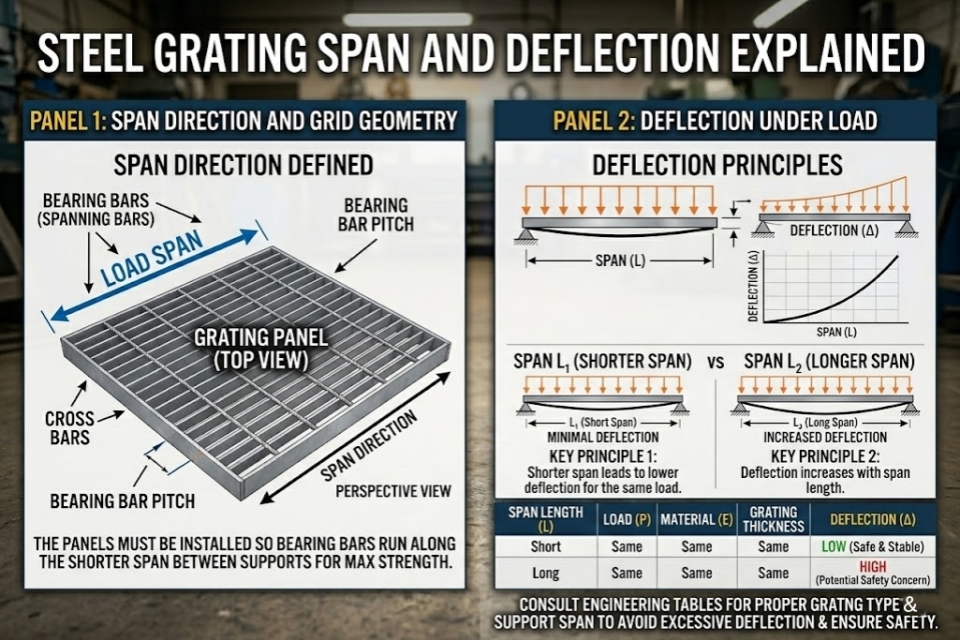
1. What Is Span in Steel Grating?
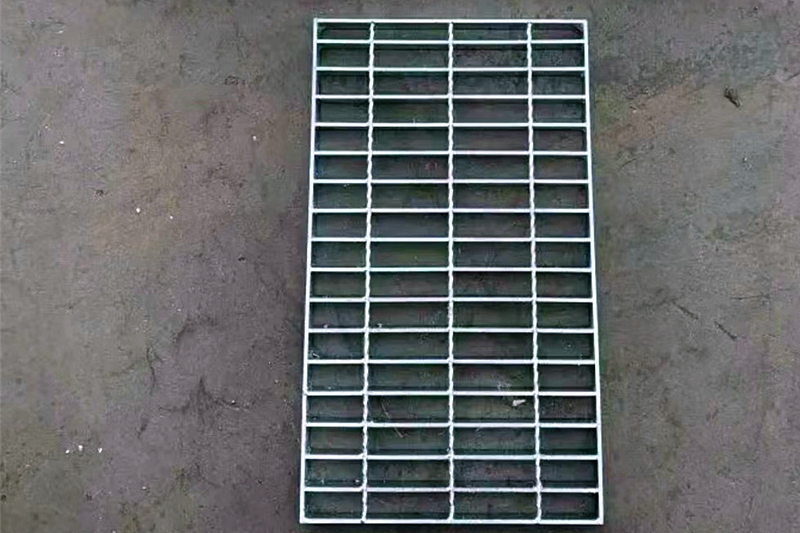
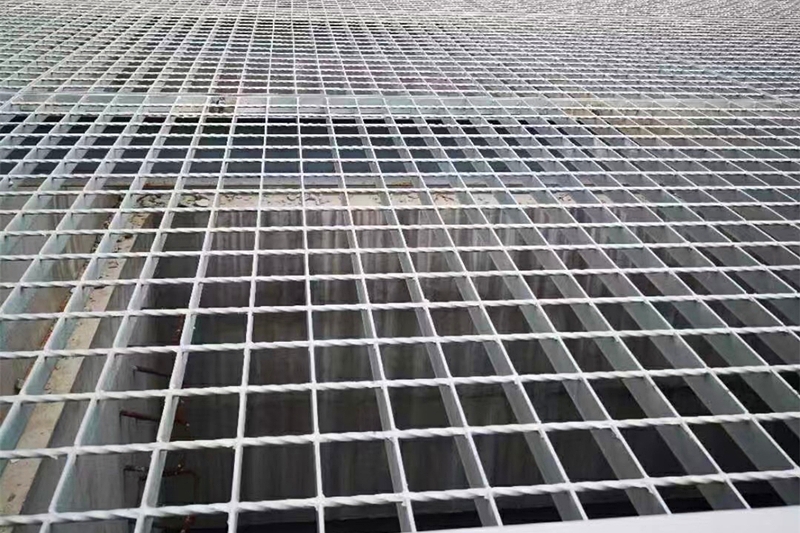
Span refers to the clear distance between supports under a grating panel. The longer the span, the greater the bending stress applied to the bearing bars.
- Shorter span = higher load capacity
- Longer span = greater deflection
- Span direction must follow bearing bar direction
- Support spacing directly impacts structural performance
For higher span requirements, engineers often select deeper bearing bars or use heavy duty steel grating to increase bending resistance.
2. Understanding Deflection Limits
Deflection is the vertical displacement of the grating panel under load. Excessive deflection may cause vibration, discomfort, or structural fatigue over time.
Industry standards typically limit deflection to L/200 or L/240, where L represents the span length.
- L/200 = common industrial limit
- L/240 = stricter deflection requirement
- Heavy traffic areas may require tighter limits
3. How Bearing Bar Size Affects Performance
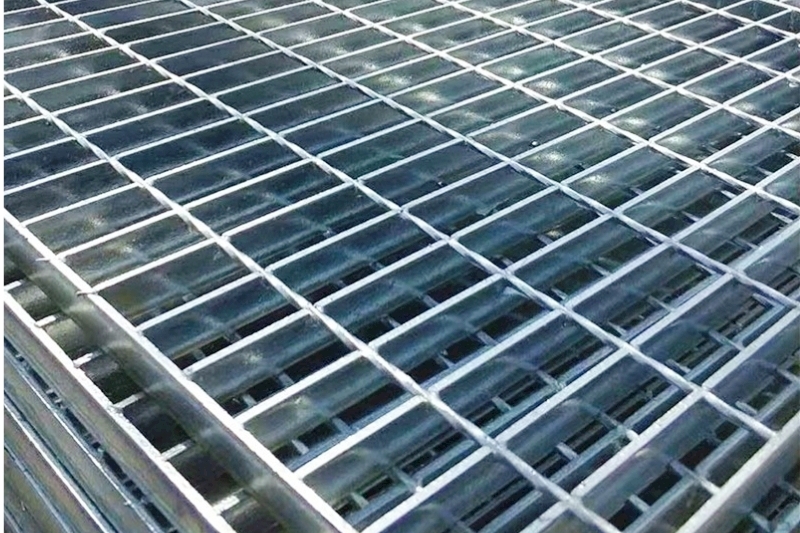
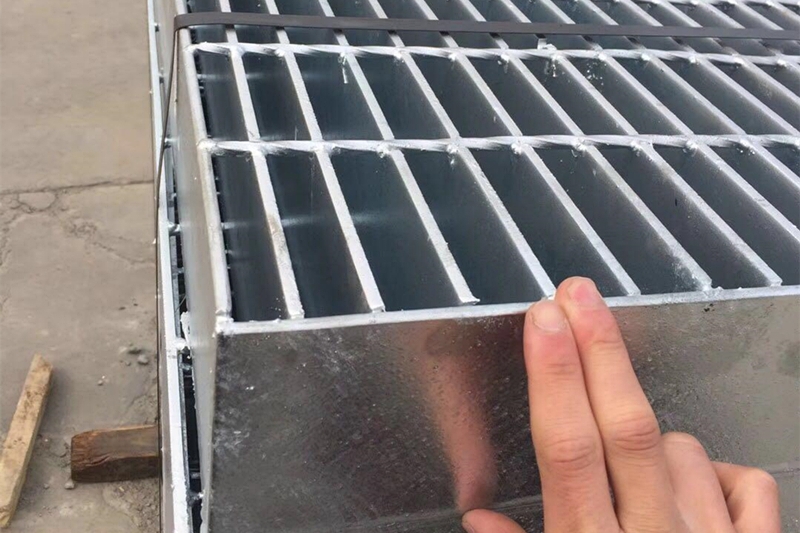
Bearing bar depth and thickness directly influence bending strength. Increasing bar height significantly improves moment resistance without changing panel spacing.
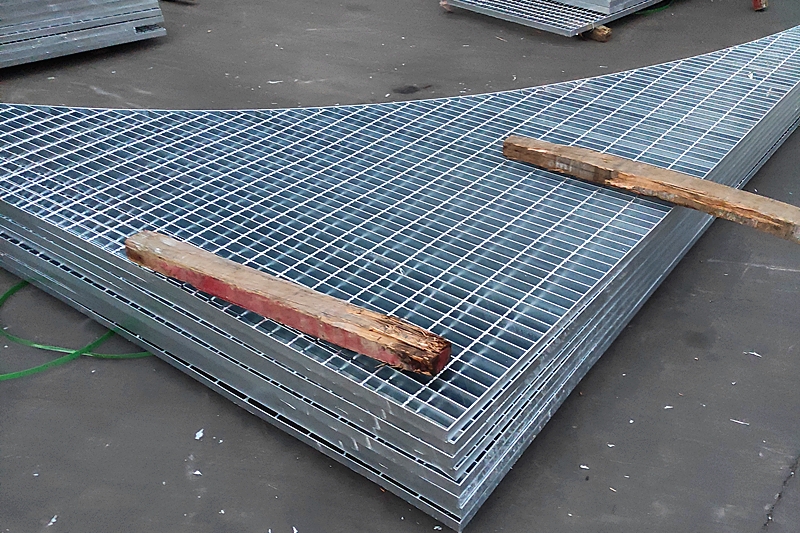
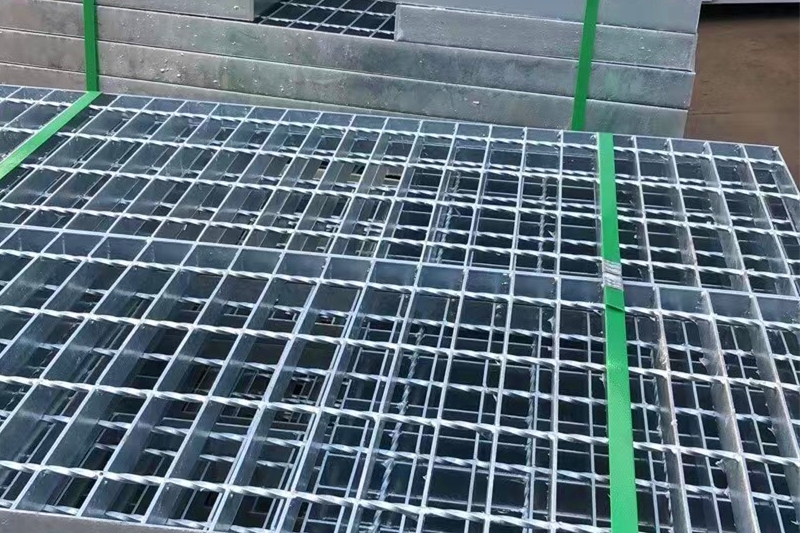
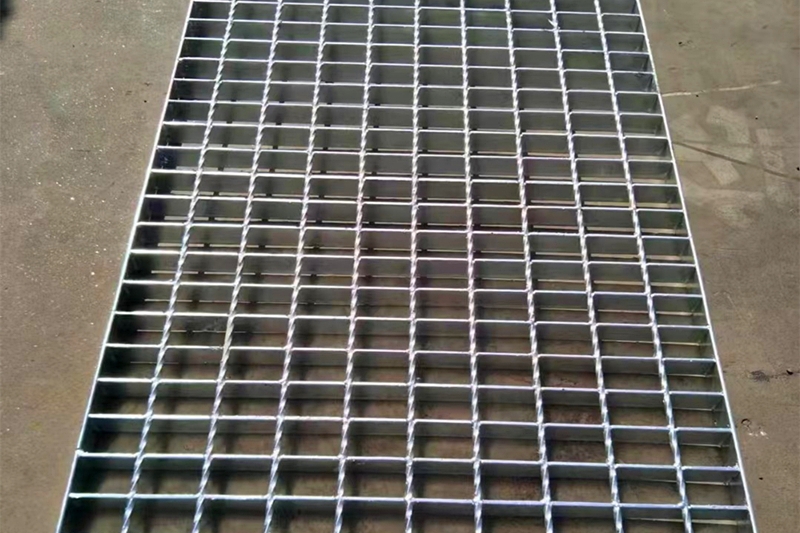
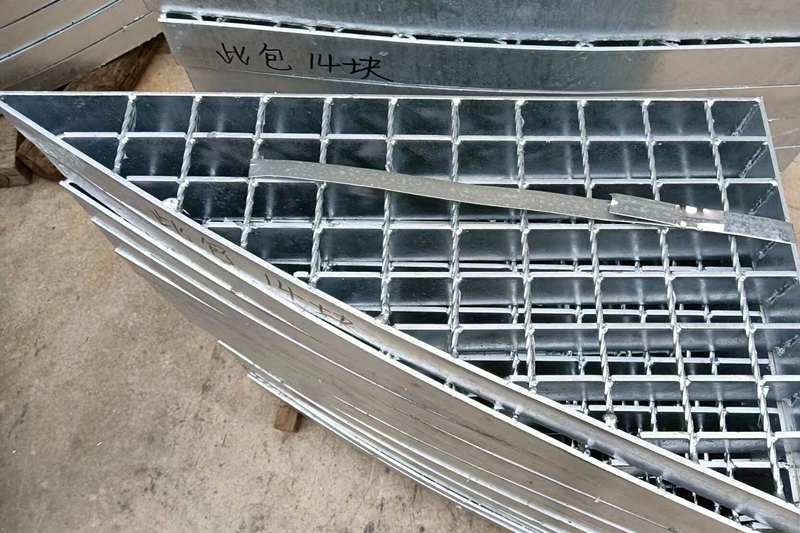
In corrosive environments, engineers frequently combine structural design with galvanized steel grating to maintain long-term durability.
4. Practical Engineering Considerations
- Confirm load type (uniform or concentrated)
- Align span direction with bearing bars
- Check support structure strength
- Avoid oversizing to control material cost
5. Technical Review Before Production
Providing accurate span, load, and deflection requirements allows a professional Steel Grating supplier to recommend the correct specification and prevent overdesign.
Engineering evaluation ensures safety compliance while optimizing cost efficiency for industrial projects.
Conclusion
Proper span and deflection analysis is essential in steel grating design. Balancing structural strength, support spacing, and allowable deflection ensures long-term reliability and performance in demanding industrial environments.