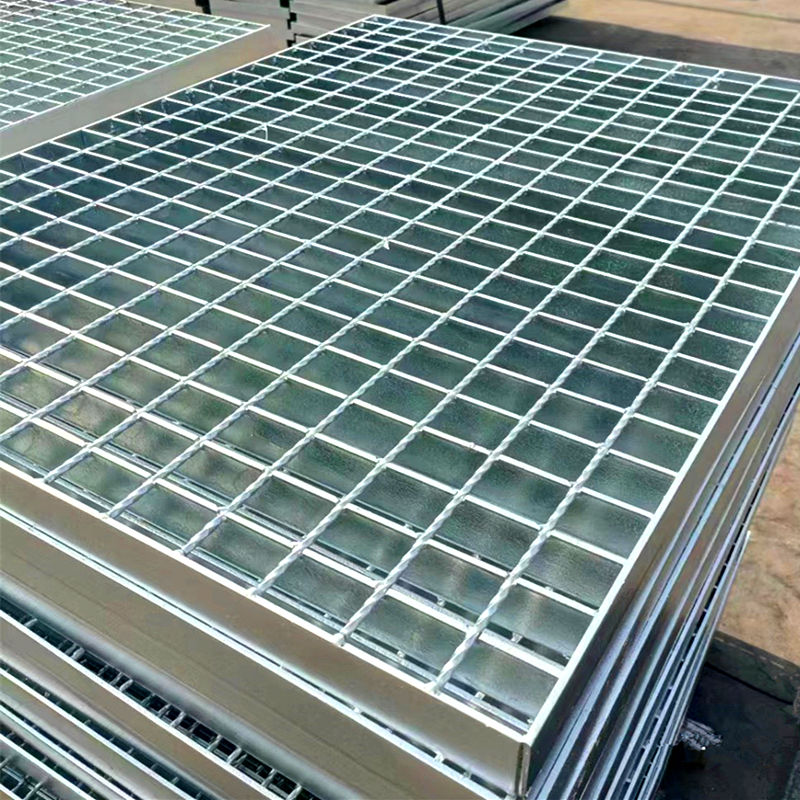
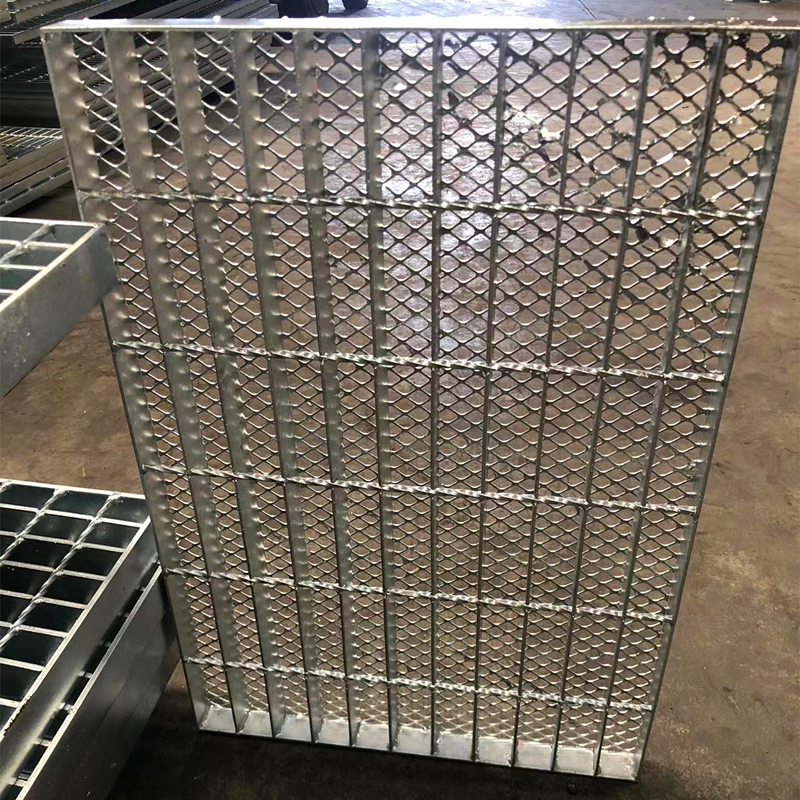
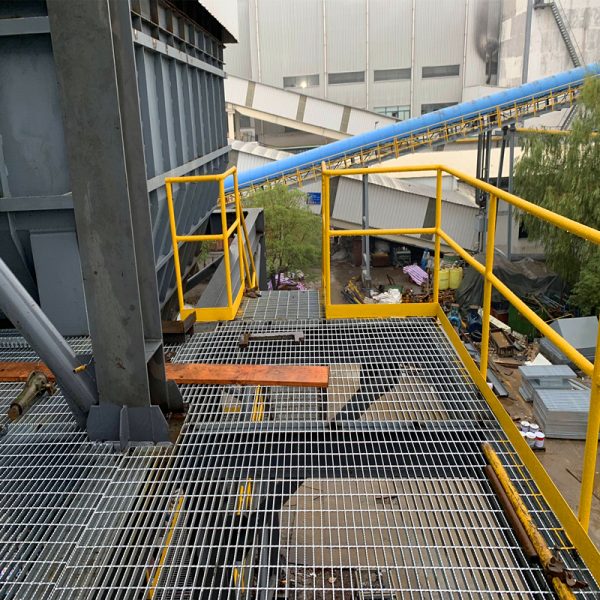
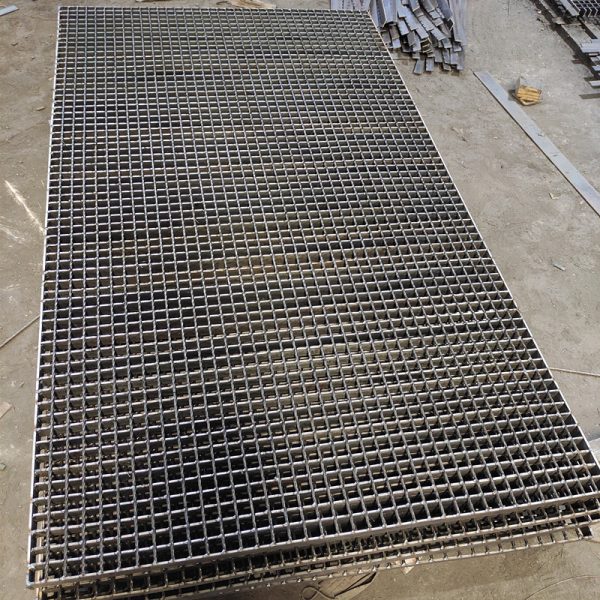
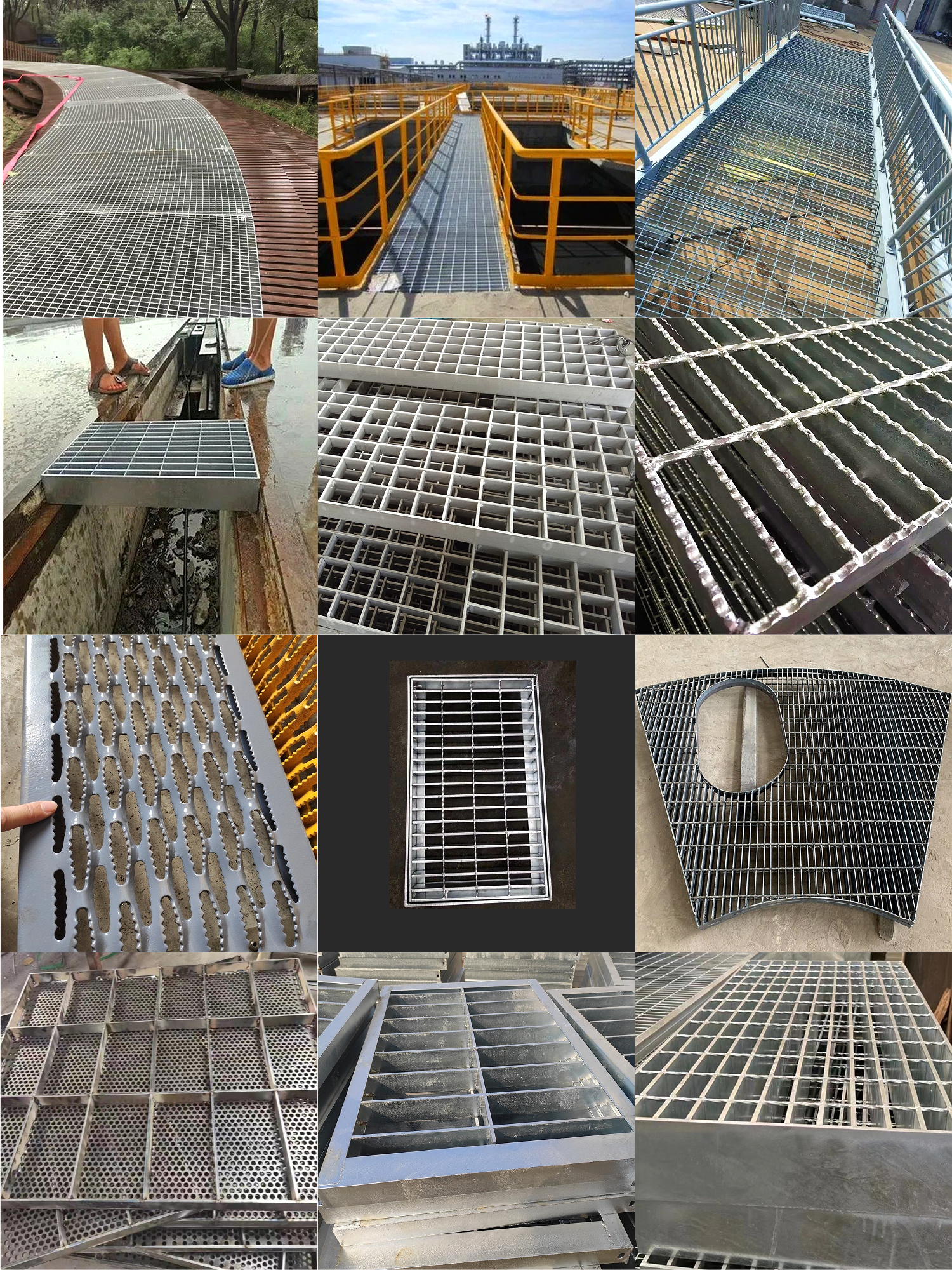
| Material Options | Mild Steel (Carbon Steel), Stainless Steel (201/304/316) |
|---|---|
| Bearing Bar Size | 25×3mm, 30 ×3mm, 40×3mm, 40×4mm, 40×5mm, 50×5mm (Custom sizes available). |
| Bearing Bar Spacing | 30mm, 40mm, 50mm. |
| Cross Bar Spacing | 50mm, 100mm. |
| Surface Treatment | Hot-Dip Galvanized (HDG), Powder Coated, Painted, or Untreated (Mill Finish). |
| Surface Profile | Plain (Smooth), Serrated (Non-slip), or I-Bar. |
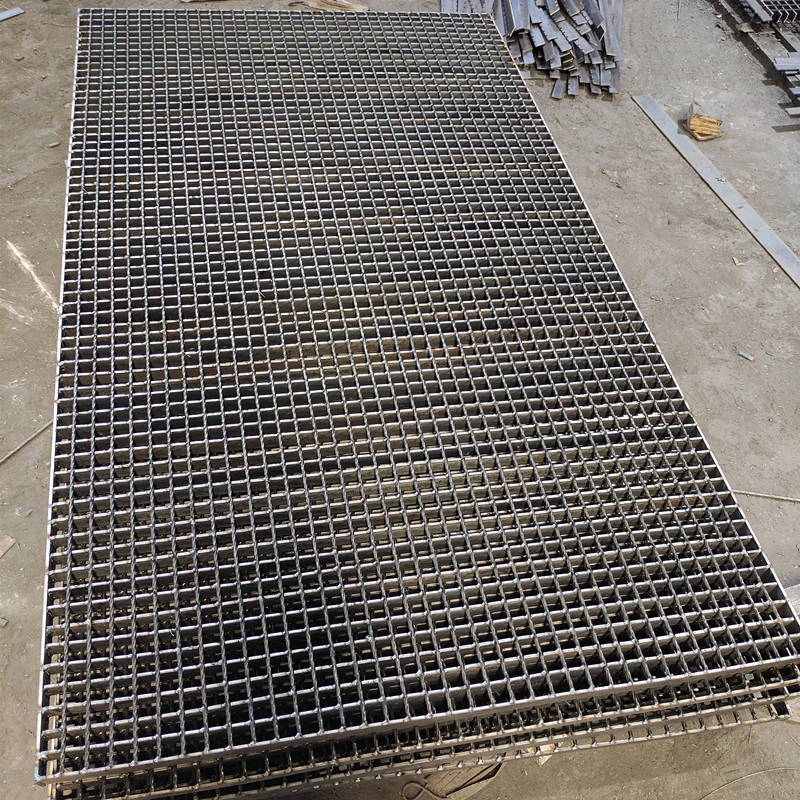
| Panel Dimensions | Standard Sizes: 1000 ×1000mm or 1000 ×2000mm or 1000 × 5800mm(Custom sizes available). |
| Loading Capacity | Light Duty (Pedestrian) or Heavy Duty (Vehicle/Truck traffic). |
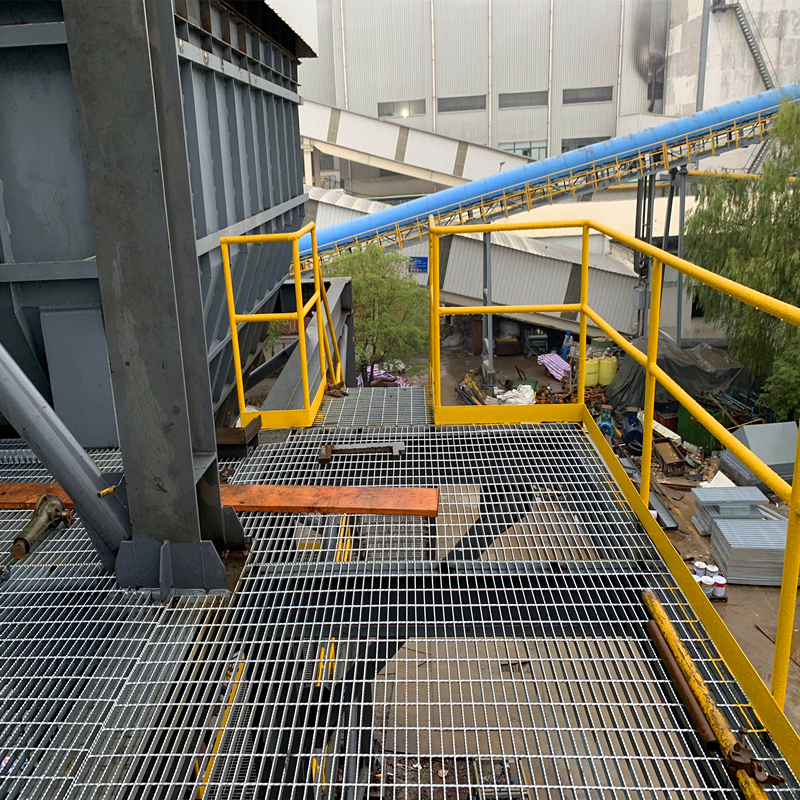
| Applications | Industrial platforms, stair treads, drainage trench covers, walkway flooring, and mezzanine decking. |
High-performance steel bar grating engineered for demanding industrial environments where load-bearing, drainage, and long-term durability matter. Widely used in platforms, walkways, and trench systems, this type of metal bar grating provides a stable and slip-resistant surface without adding unnecessary structural weight.
Standard production follows ASTM A123, ANSI/NAAMM MBG 531, and BS 4592, ensuring predictable performance across global engineering projects.
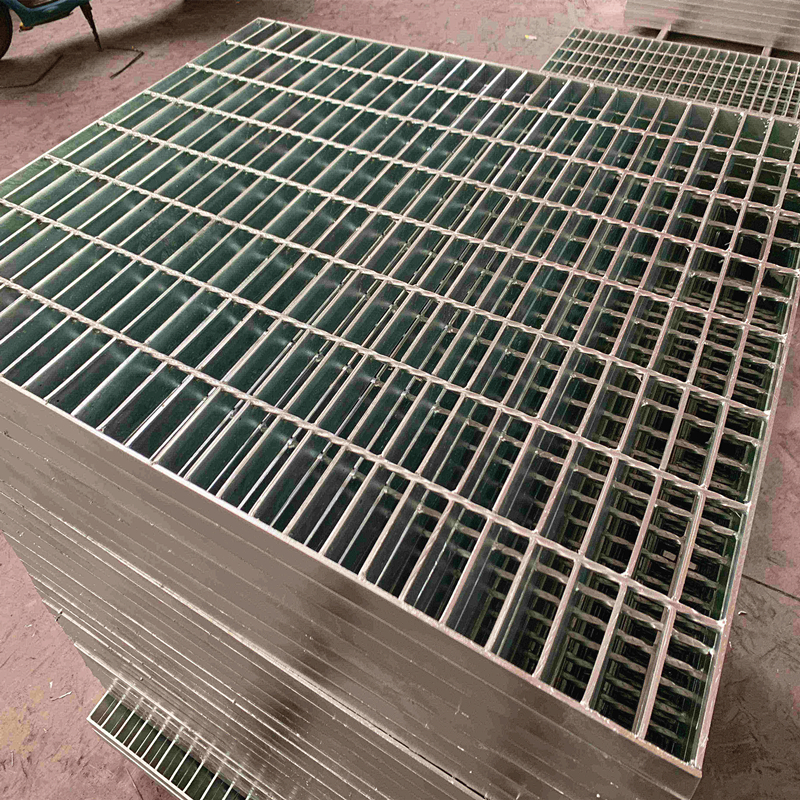
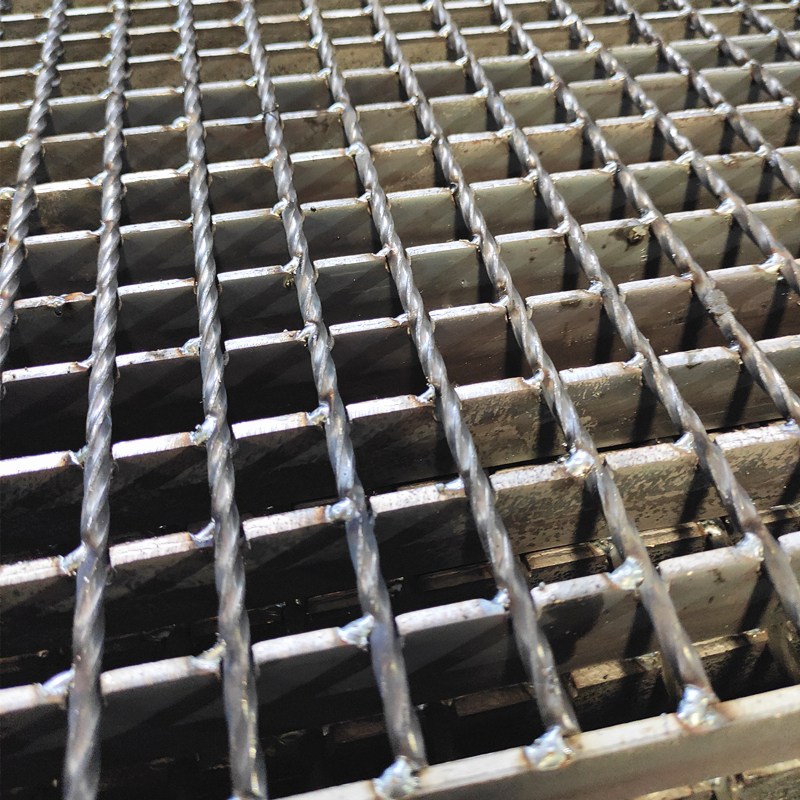
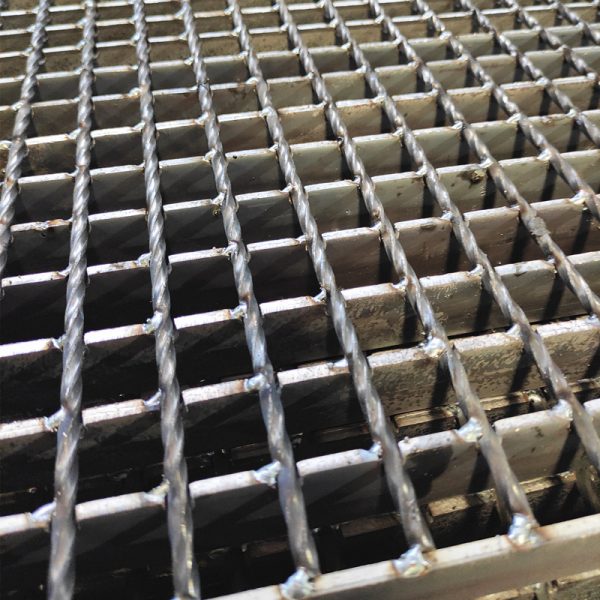
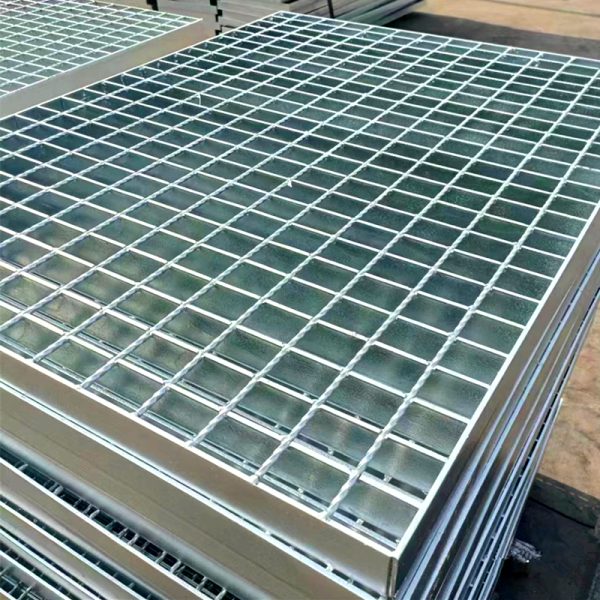
Steel bar grating is an open steel flooring system formed by connecting parallel bearing bars with perpendicular cross bars,through welded steel grating or press locked steel grating methods.
This grid structure—often referred to as steel grid grating or open bar flooring—is preferred over solid plates due to its combination of strength and open area.
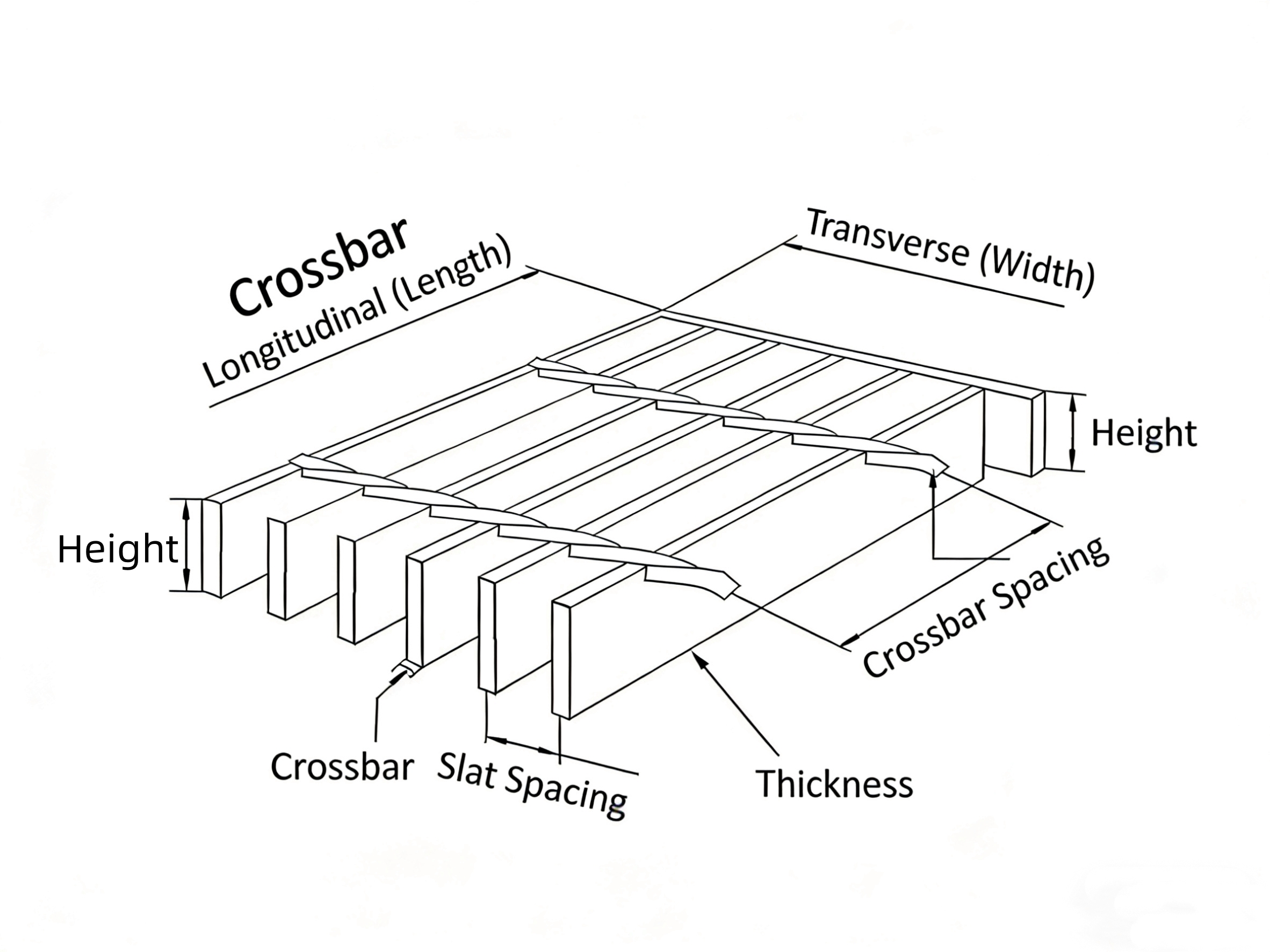
Typical structure includes:
Compared with steel plate:
Correct specification selection directly affects load performance and service life.
A standard model is expressed as:
G325/30/100
Meaning:
This format is widely used in international projects when specifying steel bar grating.
| Bearing Bar (mm) | Spacing (mm) | Cross Bar (mm) | Span (mm) | Load Capacity | Application |
|---|---|---|---|---|---|
| 25×3 | 30 | 100 | ≤1000 | Light Duty | Walkways |
| 30×3 | 30 | 100 | ≤1200 | Medium Duty | Platforms |
| 32×5 | 30 | 100 | ≤1500 | Heavy Duty | Industrial flooring |
| 40×5 | 30 | 100 | ≤1800 | High Load | Truck areas |
| 50×5 | 30 | 100 | ≤2000 | Extra Heavy | Ports / Airports |
For higher load requirements, refer to serrated steel grating options.
Selection note (engineering perspective):
For longer spans, increasing bearing bar height is more effective than simply increasing thickness. Load calculations should consider deflection limits (L/200 or L/300 depending on project standards).
Custom sizes are available for non-standard load requirements.
Lower-grade grating often shows deflection within months under continuous equipment load.
Production approach:
Coastal and chemical environments accelerate coating failure.
Solution:
Smooth surfaces increase safety risks in industrial operations.
Solution:
Complex layouts often require custom steel grating fabrication.
Support includes:
Steel bar grating is widely applied in environments where load-bearing performance, drainage efficiency, and operator safety must be balanced.
Designed for stable load distribution under heavy equipment and continuous operation.
Commonly specified in high-load scenarios using heavy duty steel grating to ensure structural integrity across wider spans.
Provides secure footing for personnel movement in elevated or restricted areas.
Often combined with serrated surfaces to enhance grip in wet or oily conditions, especially in process industries.
Allows efficient flow of water, debris, and industrial waste while maintaining surface accessibility.
Typically configured with trench drain grates for infrastructure, municipal, and factory drainage systems.
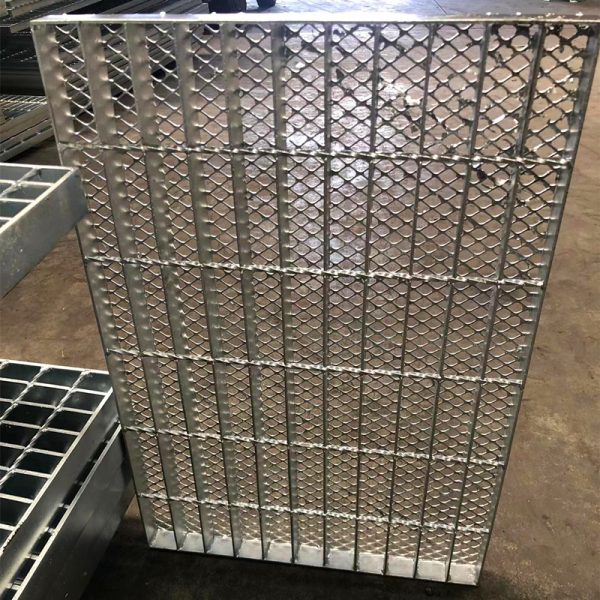
Used in industrial stair systems where slip resistance and durability are critical.
Prefabricated as grating stair treads for quick installation and consistent safety performance.
| Item | China Standard | USA / International |
|---|---|---|
| Load Calculation | Simplified tables | Detailed engineering tables |
| Deflection Limit | Not unified | L/200 or L/300 defined |
| Safety Factor | General | Integrated into design |
| Galvanizing | Local standard | ASTM A123 required |
| Coating Thickness | Standard level | Higher requirement |
| Inspection | Factory-based | Third-party common |
Standard production is carried out with controlled welding processes to ensure consistent joint strength and dimensional accuracy.
Welded joints provide higher structural rigidity compared to mechanical locking, especially under vibration or dynamic loads.
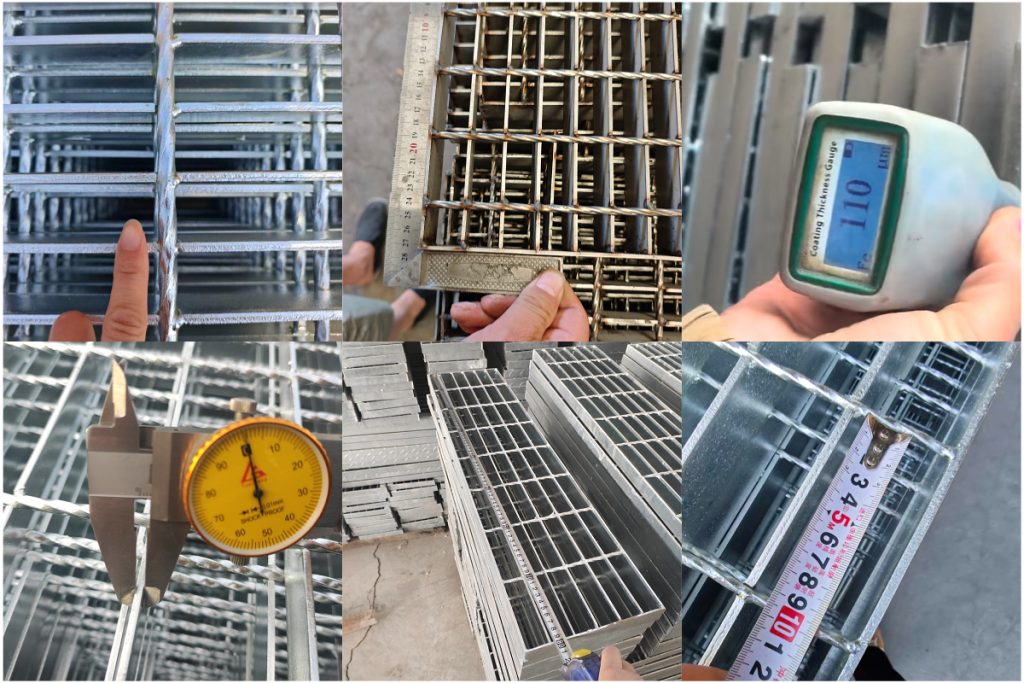
Each batch undergoes verification before shipment:
Spacing, height, and tolerances checked against drawings
Zinc thickness verified for corrosion resistance
Mill Test Reports (MTR) provided
SGS / BV inspections available upon request

Designed for long-distance marine transport:
Products arrive flat, undamaged, and ready for installation.
Fast turnaround on drawings and pricing helps keep projects on schedule.
Q1:What applications are suitable for steel bar grating?
A:Steel bar grating is suitable for industrial platforms, factory walkways, stair treads, drainage covers, trench covers, equipment access areas, ports, power plants, and chemical facilities. Its open structure provides high strength, drainage, ventilation, and safer walking performance in wet or oily environments.
Q2:How do I choose the right load capacity for industrial steel grating?
A:The correct load capacity depends on the span, bearing bar size, bar spacing, traffic type, and working environment. Light-duty walkways may use smaller bearing bars, while heavy-duty platforms, truck access areas, ports, or airports usually require thicker bearing bars and professional load calculation.
Q3:Can galvanized steel grating be used outdoors?
A:Yes. Galvanized steel grating is widely used outdoors because hot-dip galvanizing provides reliable corrosion protection. It is suitable for platforms, drainage systems, marine engineering, industrial buildings, and other exposed environments where long-term durability is required.
Q4:When should I choose serrated bar grating instead of plain grating?
A:Serrated bar grating is recommended for wet, oily, or slippery areas because the serrated surface improves anti-slip performance. Plain grating is suitable for general walkways and platforms, while serrated surfaces are better for oil and gas plants, chemical facilities, and outdoor access areas.
Q5:What does G325/30/100 mean in metal bar grating specifications?
A:G325/30/100 usually means the bearing bar is 32 mm high and 5 mm thick, the bearing bar spacing is 30 mm, and the cross bar spacing is 100 mm. This specification helps buyers confirm strength, spacing, and suitability for different project loads.
Q6:Can steel grating panels be customized according to drawings?
A:Yes. Steel grating panels can be customized based on drawings, required size, bearing bar height, bar thickness, spacing, surface type, load capacity, and installation method. Custom fabrication helps ensure the grating fits the actual platform, walkway, or drainage system accurately.
Q7:What is the difference between welded grating and press locked grating?
A:Welded grating is made by welding cross bars to bearing bars, making it strong and durable for industrial use. Press locked grating is mechanically locked together, offering a cleaner appearance and stable structure for platforms, architectural areas, and customized projects.
Q8:Is hot-dip galvanized bar grating suitable for coastal or chemical environments?
A:Hot-dip galvanized bar grating can be used in coastal, outdoor, and many industrial environments when the zinc coating meets project requirements. For marine engineering or chemical plants, coating thickness, material selection, and inspection standards should be confirmed before production.
Q9:What information is needed for a custom bar grating quotation?
A:To provide an accurate quotation, please send the material, surface treatment, bearing bar size, bearing bar spacing, cross bar spacing, panel size, quantity, load requirement, and application. Drawings are helpful for confirming layout, cutting, edge banding, and installation details.
Q10:How is quality controlled before shipment?
A:Quality inspection can include checking bearing bar height, thickness, spacing, panel dimensions, welding quality, surface finish, and galvanizing thickness. Material certificates, mill test reports, and third-party inspections such as SGS or BV can also be supported when required.
Q11:What standards can your steel bar grating meet?
A:Our steel bar grating can be produced according to common project requirements such as ASTM A123 for hot-dip galvanizing, ANSI/NAAMM MBG 531, BS 4592, and YB/T 4001.1. Standards can be confirmed based on the destination market and engineering specifications.
Q12:Do you supply heavy-duty grating for large industrial projects?
A:Yes. We supply heavy-duty grating for platforms, truck access areas, ports, airports, power plants, and other demanding industrial projects. Production can be arranged according to load requirements, span, surface treatment, drawings, packaging needs, and international delivery schedules.

Take a behind-the-scenes look at how we create high-quality steel bar gratings for various industrial applications. Watch our expert team craft durable and reliable grating products, including metal bar grating, carbon steel grating, and open bar flooring, designed for industrial platforms, walkways, and more.
From the initial design to the final product, we ensure precision, strength, and fast delivery. View our factory live footage to see the meticulous production process that makes our steel grating stand out in quality and performance.
Contact us today for personalized quotes and fast manufacturing tailored to your needs.