Tell:+86 131 6555 8910(WhatsApp/WeChat)
logo

Welded Steel Grating

Additional information

Material Options

Mild Steel (Carbon Steel), Stainless Steel (201/304/316)

Bearing Bar Size

25×3mm, 30 ×3mm, 40×3mm, 40×5mm, 50×5mm (Custom sizes available).

Bearing Bar Spacing

30mm, 40mm, 50mm.

Cross Bar Spacing

50mm, 100mm.

Surface Treatment

Hot-Dip Galvanized (HDG), Powder Coated, Painted, or Untreated (Mill Finish).

Surface Profile

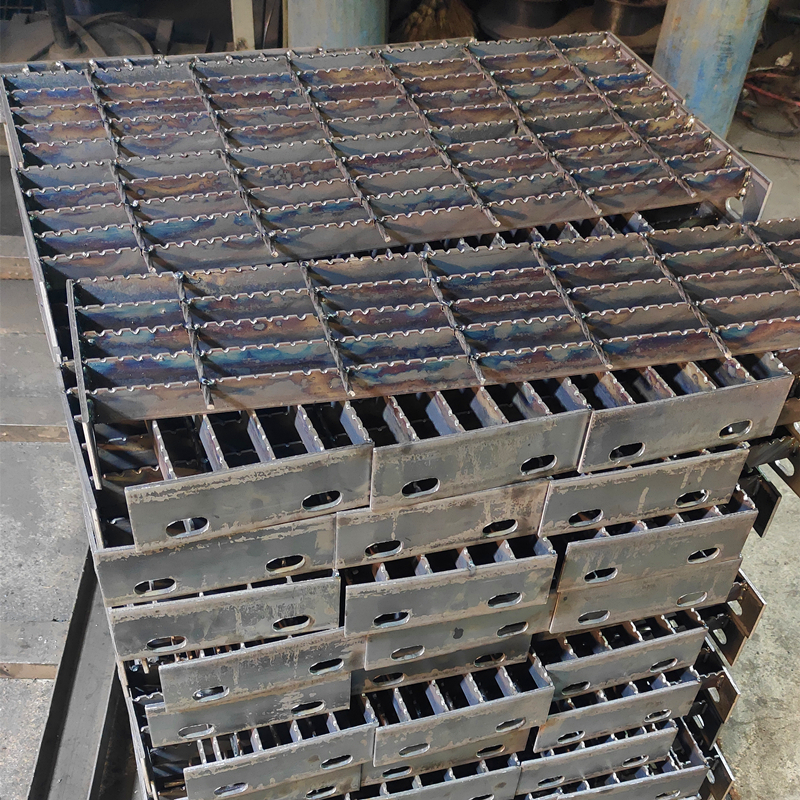
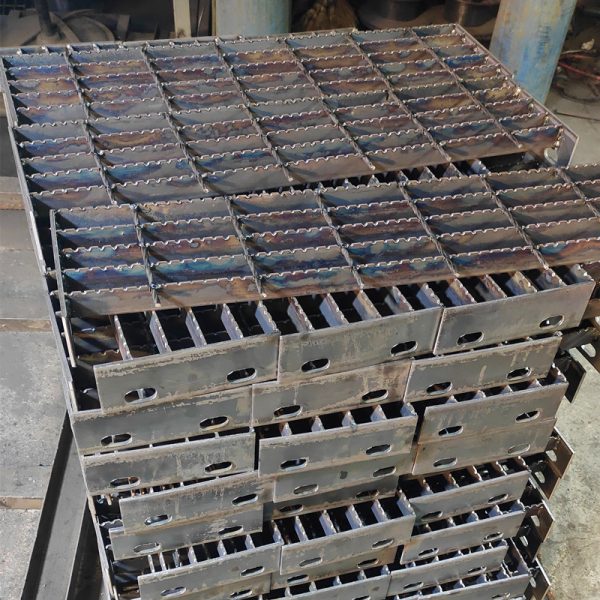
Plain (Smooth), Serrated (Non-slip), or I-Bar.

Panel Dimensions

1000 ×1000mm or 1000 ×2000mm or 1000 × 5800mm(Custom sizes available).

Applications

Industrial platforms, stair treads, drainage trench covers, walkway flooring, and mezzanine decking.

Loading Capacity

Light Duty (Pedestrian) or Heavy Duty (Vehicle/Truck traffic).

Manufacturing Standards

ASTM A123, BS4592, AS1657, or YB/T4001.

Please email us with your required specifications based on the above parameters. We will provide customized quotes and manufacturing according to your requirements.

Welded Steel Grating for Industrial Platforms and Infrastructure

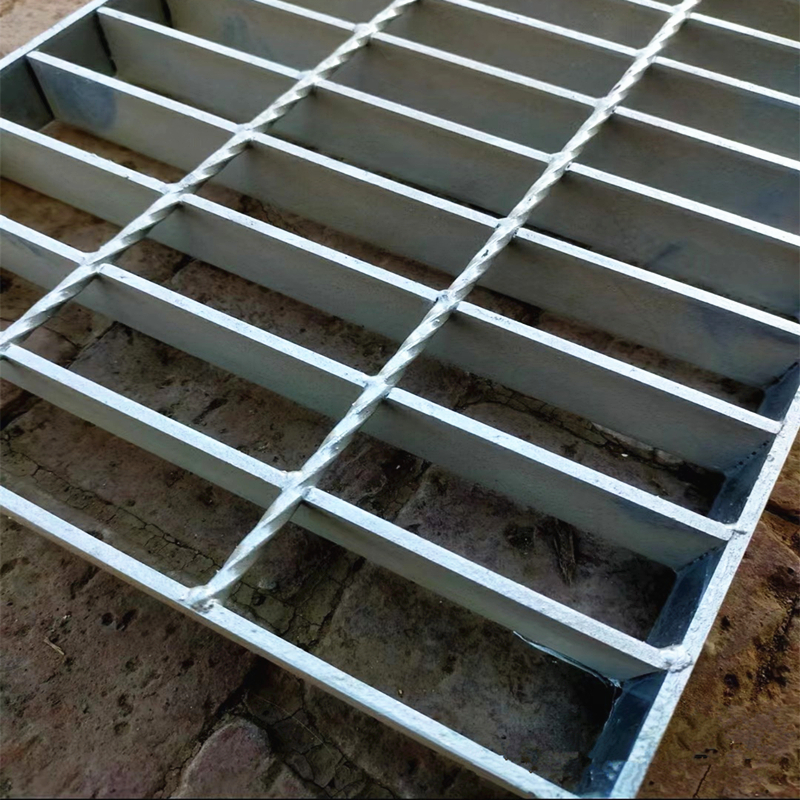
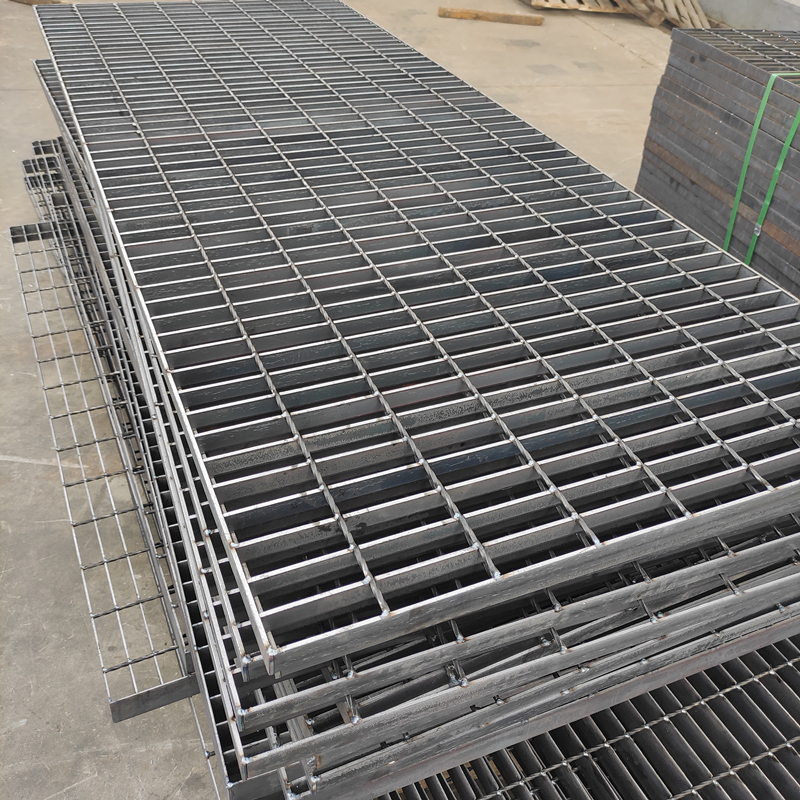
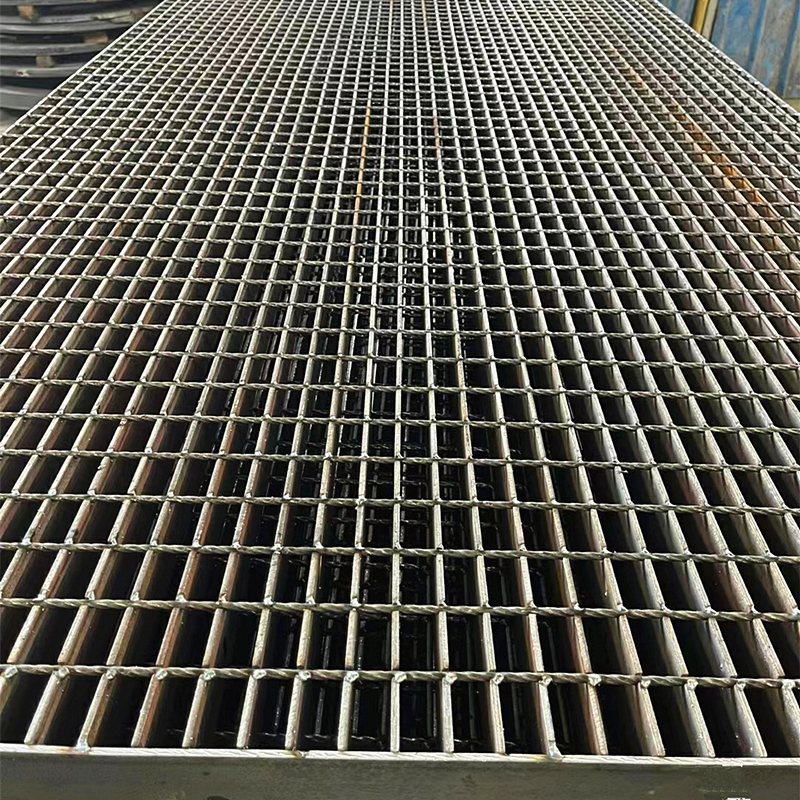
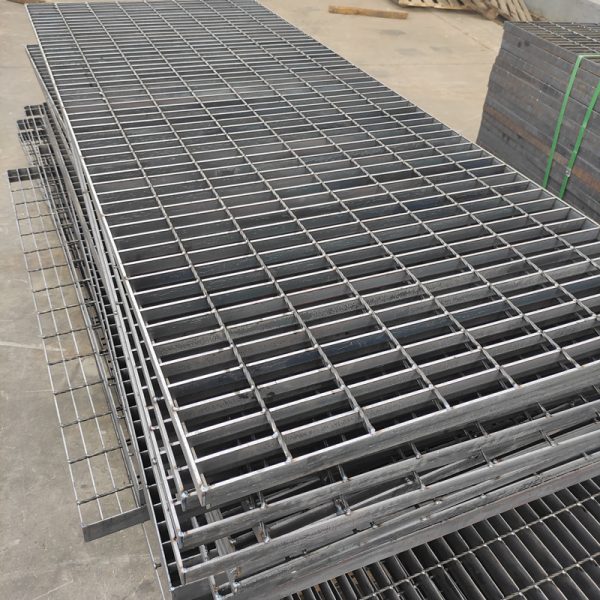
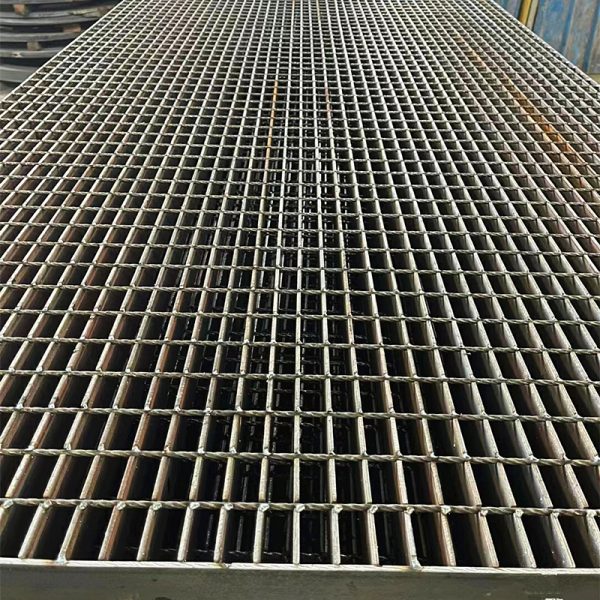
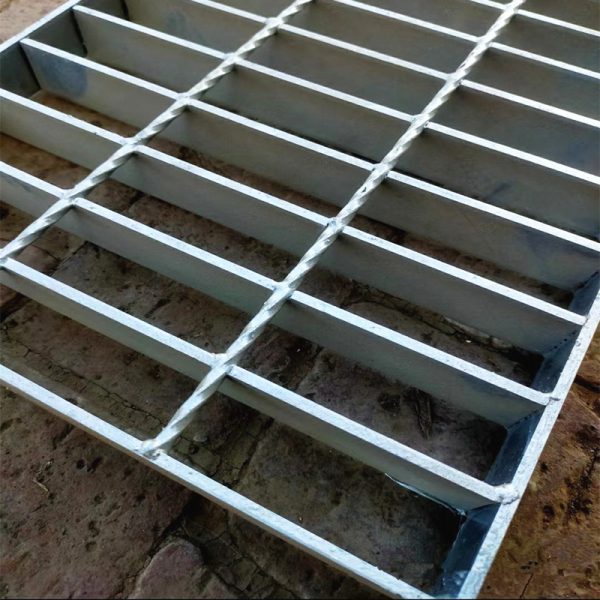
Welded steel grating is the most widely specified grating type for industrial flooring, offering high load capacity, structural rigidity, and long-term durability in demanding environments. This type of welded steel grating is manufactured using automated resistance welding, where cross bars are permanently fused into bearing bars under high pressure and electrical current.

Compared with other fabrication methods, welded steel grating delivers superior joint strength and consistent load distribution, making it the preferred solution for industrial platforms, walkways, and drainage systems. Standard production supports large-scale supply with stable quality and precise dimensional control for global engineering projects.

welded steel grating

Welded Steel Grating Overview

Welded steel grating is a type of steel bar grating formed by resistance welding cross bars into load-bearing flat bars at precise spacing intervals.

This manufacturing method produces a permanent joint between bars, resulting in a high-strength grid structure widely used in industrial flooring systems.

Compared with other fabrication types, welded steel grating offers:

  • Lower production cost at scale
  • Stronger joint integrity
  • Higher load-bearing efficiency

It remains the most commonly used grating type across global industrial projects.


Manufacturing Process of Welded Steel Grating

Production of welded steel grating follows an automated resistance welding process:

  • Bearing bars are aligned at fixed spacing
  • Cross bars are pressed into position
  • High electrical current and pressure are applied simultaneously
  • Weld joints are formed instantly at each intersection

Heavy-duty automatic resistance welding machines ensure consistent weld penetration and uniform load distribution across all bearing bars.

This controlled process delivers:

  • Uniform weld strength
  • High dimensional accuracy
  • Stable structural performance

Compared with press locked steel grating, welded steel grating provides stronger joint fixation and is better suited for heavy-duty applications.


Specifications of Welded Steel Grating

Welded steel grating specifications are defined based on load requirements and span conditions.
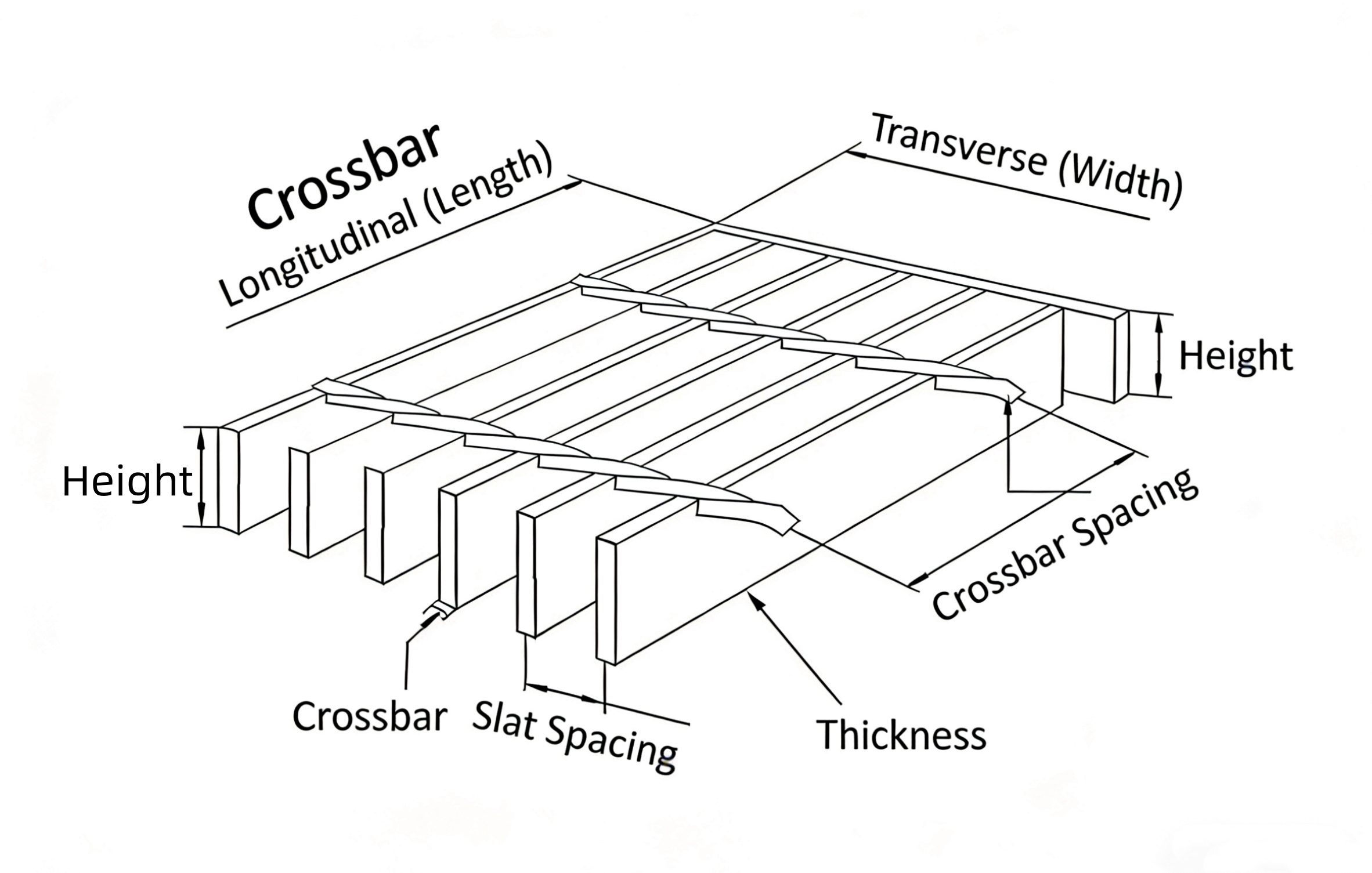
Steel grating specifications and marking

Common Parameters

  • Bearing Bar Spacing (Center-to-Center)
    19W4 (US standard) / 30 mm (metric standard)
  • Cross Bar Spacing
    Typically 100 mm or 4 inch
  • Bar Size & Thickness
    25×3 mm to 50×5 mm (custom sizes available)
  • Materials
    Carbon steel / stainless steel
  • Surface Treatment
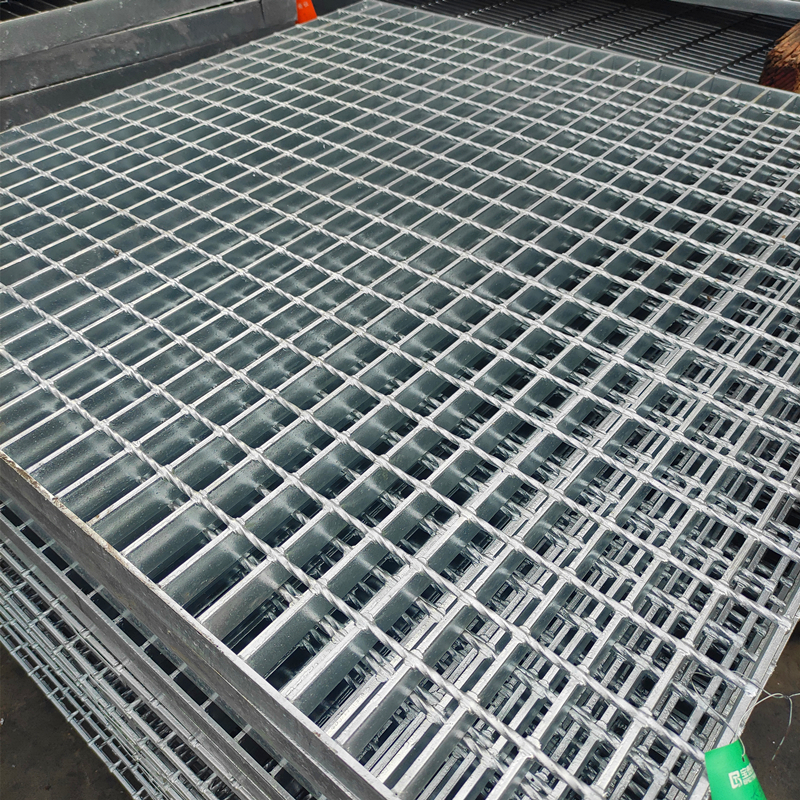
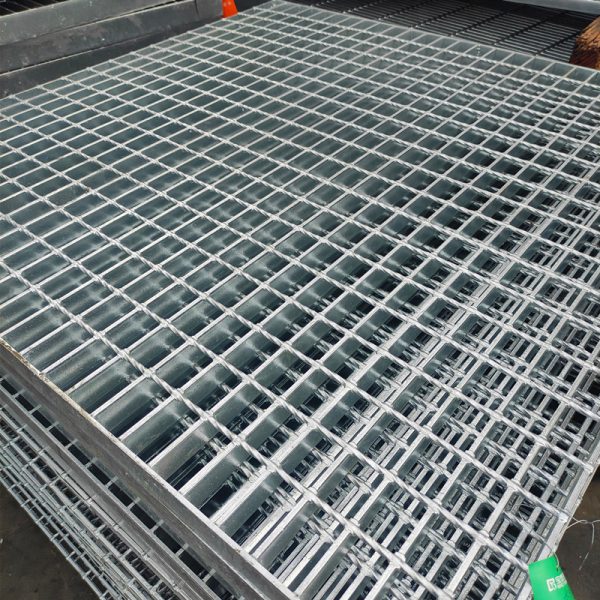
    Hot-dip galvanizing / galvanized steel grating

Standard Comparison (Global Projects)

American Standard China Standard Bar Spacing (C-C)
11-W-4 G17/100 17.1 x 101.6 mm
13-W-4 G20/100 20.3 x 101.6 mm
15-W-4 G25/100 23.8 x 101.6 mm
19-W-4 G30/100 30.16 x 101.6 mm
22-W-4 G35/100 35.1 x 101.6 mm
25-W-4 G40/100 40.0 x 101.6 mm

Not sure which specification fits your project? Send drawings or load requirements for quick conversion and quotation.


Load Capacity & Performance

Welded steel grating is engineered for heavy-duty applications where structural performance is critical.

  • High load-bearing capacity under static and dynamic loads
  • Stable performance across long spans
  • Resistance to deformation and impact
  • Long-term durability in industrial environments

For higher load requirements, refer to heavy duty steel grating.


Structural Advantage in High-Vibration Environments

Welded steel grating provides superior structural rigidity compared to mechanical locking systems, especially under high vibration and dynamic load conditions.

  • Reduced risk of joint loosening
  • Improved fatigue resistance
  • Stable performance under continuous mechanical stress

This makes welded steel grating suitable for heavy industrial and infrastructure environments.


Applications of Welded Steel Grating

Welded steel grating is widely specified in engineering projects where structural strength, durability, and drainage performance must be balanced under real operating conditions.

Industrial Platforms

Designed for continuous load-bearing under heavy equipment and operational traffic.
Frequently applied with heavy duty steel grating to maintain structural stability across larger spans.

Petrochemical Plants

Suitable for corrosive and high-risk environments where both strength and surface safety are required.
Serrated surface options improve anti-slip performance in oily or chemical-exposed areas.

Power Stations

Used in maintenance platforms and elevated structures exposed to thermal stress and dynamic loads.
Welded steel grating maintains stable performance where vibration resistance is critical.

Walkways & Drainage Systems

Applied in access walkways and integrated drainage layouts across industrial facilities.
Commonly paired with trench drain grates for efficient water discharge and safe footing.
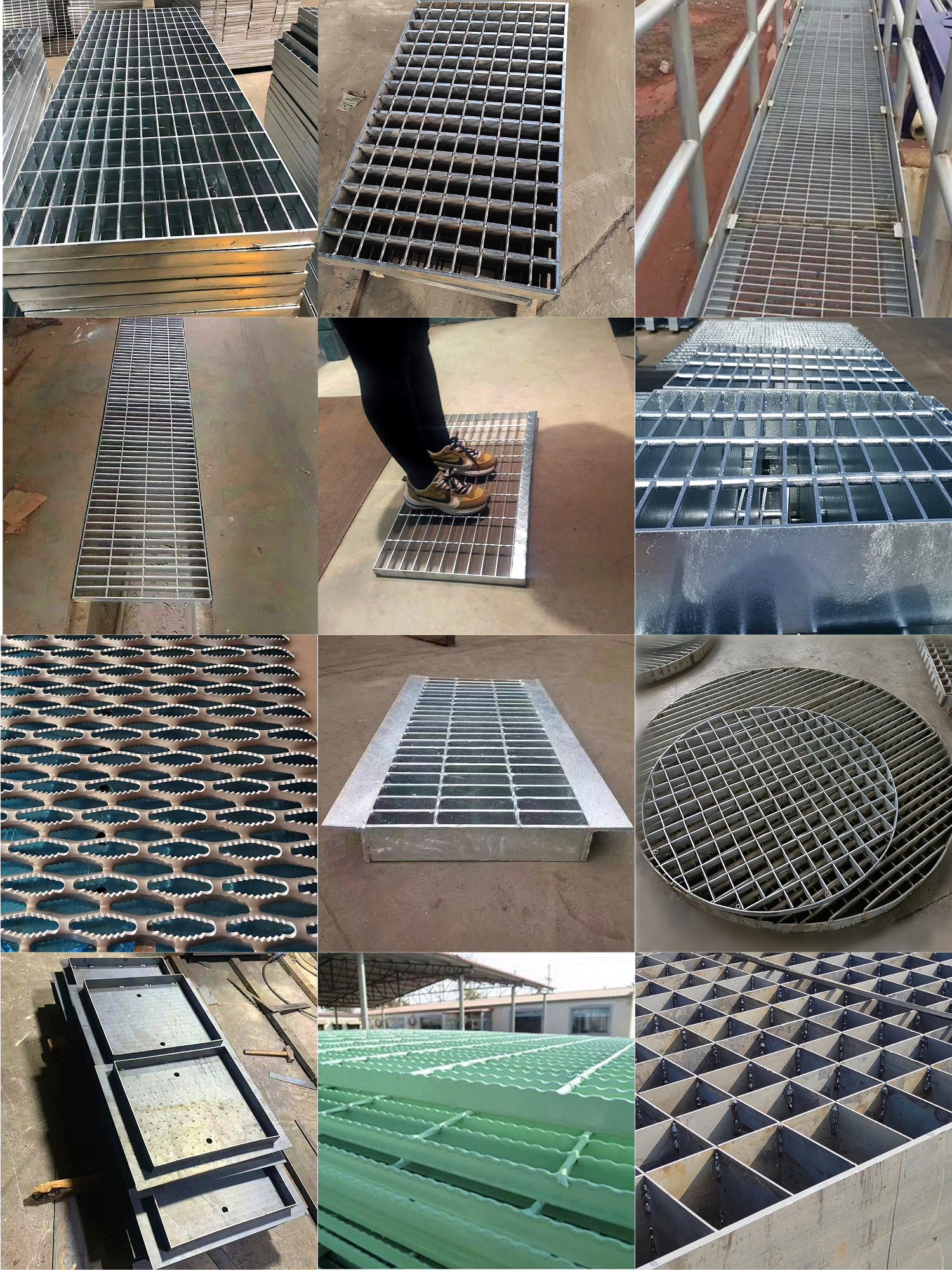
custom welded steel grating cut to size

Anti-Slip & Safety Options

Surface configurations of welded steel grating can be adapted for safety-critical environments.

  • Serrated surface improves grip in wet or oily conditions
  • Enhanced traction for industrial safety compliance

Available options include:


Custom Welded Steel Grating

Welded steel grating supports full customization based on project requirements.

  • Custom sizes and bar configurations
  • Load-based design optimization
  • Cut-outs for pipes and equipment
  • Fabrication based on technical drawings

Project-specific solutions available with custom steel grating.


Installation & Fixing Methods

Welded steel grating allows fast and secure installation.

  • Mechanical fixing using clips
  • Welding fixation for permanent installation
  • Easy removal for maintenance when required

Compatible accessories:


Quality Control

As a 
→  steel grating Factory

Each batch of welded steel grating is verified through a controlled inspection process:

  • Weld joint integrity inspection
  • Dimensional tolerance checks
  • Zinc coating thickness testing
  • Raw material certification (MTR)

Third-party inspection available (SGS / BV) for export projects.


Packaging & Export Logistics

Seaworthy packaging is applied to welded steel grating for long-distance transportation:

  • Reinforced steel strapping
  • Edge protectors to prevent deformation
  • Surface protection against coating abrasion

Products arrive flat, intact, and ready for installation.


Why Choose Welded Steel Grating from Factory Production

Welded steel grating produced through automated production lines ensures:

  • Consistent weld quality and dimensional accuracy
  • High-volume manufacturing capacity for bulk orders
  • Strict galvanizing and inspection standards
  • Proven export supply to Europe, Middle East, and North America
  • Factory-direct pricing for cost efficiency

Request a Quote

Welded steel grating is widely used in industrial and infrastructure projects requiring strength, durability, and cost efficiency.

  • Fast quotation within 12 hours
  • Technical drawings and load calculation support
  • Bulk production and global delivery

Fast turnaround on drawings and pricing helps keep projects on schedule.


Get a Quote


Q1:What information should I provide for a Welded Steel Grating quotation?

A:Please provide the panel size, bearing bar size, bearing bar spacing, cross bar spacing, material, surface treatment, quantity, application, and load requirement. If you have drawings, layout plans, or installation details, we can review them and recommend a suitable specification before production.


Q2:Can welded grating panels be customized for special sizes or cut-outs?

A:Yes. Welded grating panels can be customized with different dimensions, bearing bar spacing, cross bar spacing, cut-outs, edge banding, and fixing positions. Custom fabrication is especially useful for platforms, drainage openings, equipment areas, and projects where standard panel sizes cannot fit the installation layout.


Q3:What bearing bar spacing should I choose for industrial platforms?

A:Common bearing bar spacing includes 19W4, 30 mm, and 40 mm. For most industrial platforms and walkways, 30 mm spacing is widely used. If the project requires higher load capacity, smaller openings, or special safety requirements, the spacing should be confirmed according to span and load conditions.


Q4:Is galvanized steel grating suitable for outdoor use?

A:Yes. Galvanized steel grating is suitable for outdoor platforms, walkways, drainage systems, and industrial structures. Hot-dip galvanizing helps protect the surface from corrosion during long-term exposure. For coastal, chemical, or high-humidity environments, zinc coating thickness and inspection requirements should be confirmed before ordering.


Q5:When should I choose serrated steel grating for safety?

A:Serrated steel grating is recommended for wet, oily, muddy, or slippery working areas. The serrated bearing bars provide better grip than plain surface grating, making it suitable for petrochemical plants, refineries, offshore platforms, maintenance walkways, and other areas where anti-slip performance is important.


Q6:What is the difference between welded grating and press locked grating?

A:Welded grating is produced by resistance welding cross bars to bearing bars, creating a rigid structure for heavy industrial use. Press locked grating is mechanically assembled and often chosen for cleaner appearance or architectural applications. For large-volume industrial flooring, welded grating is usually more cost-effective.


Q7:Can Welded Steel Grating be used for heavy-duty applications?

A:Yes. Welded Steel Grating can be designed for heavy-duty platforms, equipment areas, mining facilities, power plants, and infrastructure projects. The final load capacity depends on bearing bar size, spacing, span, support conditions, and surface treatment, so load requirements should be checked before production.


Q8:Do you support stainless steel grating for corrosive environments?

A:Yes. Stainless steel grating can be supplied for projects that require stronger corrosion resistance, hygiene, or chemical resistance. It is commonly used in food processing, chemical plants, wastewater treatment, and special industrial environments. The material grade should be selected according to the actual working condition.


Q9:How do you control dimensional accuracy before shipment?

A:Dimensional inspection includes checking panel length, width, bearing bar spacing, cross bar spacing, diagonal tolerance, cut-out position, and edge finishing. This helps ensure the grating fits the installation structure correctly and reduces adjustment work on site during platform or walkway installation.


Q10:What quality checks are performed on resistance welded grating?

A:Quality checks can include weld strength inspection, bearing bar alignment, surface treatment inspection, galvanizing thickness testing, dimensional tolerance control, and packaging review. For project orders, third-party inspection such as SGS or BV can also be arranged before shipment if required.


Q11:How is welded metal bar grating packed for export?

A:Welded metal bar grating is usually packed with reinforced steel strapping, edge protection, and seaworthy bundling. Packaging is designed to reduce deformation, coating damage, and edge impact during container loading and ocean transportation. Special packing requirements can also be discussed before shipment.


Q12:Can you produce Welded Steel Grating according to different international standards?

A:Yes. Welded Steel Grating can be produced according to common project requirements in different markets, including metric and inch-based specifications such as 30 mm spacing or 19W4. Drawings, standards, load tables, and inspection requirements should be confirmed before production to avoid specification mismatch.

Welded Steel Grating Manufacturing Video

Watch our factory live footage to see how welded steel grating is produced for heavy-duty industrial platforms, walkways, stair treads, and drainage applications.

Machine pressure welded steel grating

In this video, you can see the key production process of welded metal bar grating, including steel bar preparation, cross bar positioning, resistance welding, cutting, surface finishing, and quality inspection.

Machine pressure welded steel grating

Skilled Welding worker

The rigid welded structure provides high strength, stable load performance, and long service life for demanding industrial flooring projects.


grating factory
grating factory
Galvanized Steel Grating Packaging for Export

Raw material of steel grating flat steel

Raw material

Raw material of steel grating twist steel

Raw material

Send us your drawings or required specifications to receive a free catalog, technical support, and a fast quotation.