









Introduction: Why Wastewater Facilities Rely on Steel Bar Grating
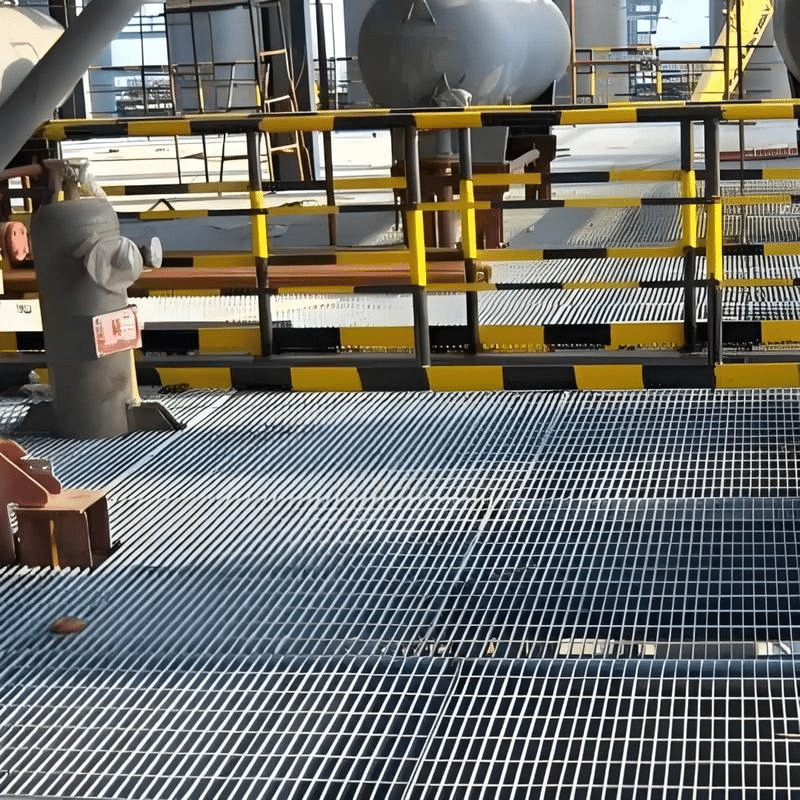
In wastewater treatment plants and drainage infrastructure, the walking surface is not just a structural detail—it is part of the operational safety system. Constant exposure to moisture, chemicals, sludge, and fluctuating loads creates an environment where conventional flooring materials quickly degrade.
This is where steel bar grating for wastewater plants becomes a preferred solution. It provides a durable, open structure that supports heavy industrial use while allowing water, debris, and chemicals to pass through without accumulation.
For engineers and facility managers, the decision is usually driven by three priorities: safety, corrosion resistance, and long-term maintenance cost control.
Wet and Corrosive Environments in Wastewater Treatment Plants
Wastewater facilities are among the most aggressive industrial environments for structural materials. Conditions typically include:
- Continuous exposure to water and high humidity
- Chemical exposure (chlorine, sulfides, treatment agents)
- Organic sludge and sediment buildup
- Temperature and seasonal fluctuations
Solid flooring in these environments often leads to hidden corrosion, trapped moisture, and structural weakening over time.
Steel bar grating performs better in these conditions because its open-grid design prevents water retention and reduces surface degradation. When properly galvanized or coated, it significantly extends service life even in highly corrosive zones.
Drainage Channels: Structural Access Without Blocking Flow
Drainage channels require a surface that supports foot traffic and light equipment while maintaining uninterrupted water flow. This is one of the core applications of steel bar grating for wastewater plants.

Unlike solid covers, bar grating allows:
- Free passage of stormwater and process water
- Reduced risk of clogging or overflow
- Easy inspection of underlying drainage systems
- Quick removal of debris without dismantling the structure
From a maintenance standpoint, this design reduces downtime and allows crews to access channels without compromising hydraulic performance.
Anti-Slip Walking Surfaces for Operational Safety
Safety is a critical concern in wastewater treatment environments where walkways are frequently wet and contaminated.

Steel bar grating offers a naturally high-friction surface, especially when serrated bearing bars are used. This helps reduce slip risks in areas such as:
- Pump stations
- Clarifier platforms
- Chemical dosing areas
- Maintenance walkways over open tanks
Compared to painted steel plates or concrete surfaces, grating maintains traction even under continuous moisture exposure. This makes it a practical choice for OSHA-oriented industrial safety planning.
Corrosion Control and Material Selection Strategies

Corrosion resistance is often the determining factor in selecting steel bar grating for wastewater applications. Common material options include:
Hot-Dip Galvanized Steel
The most widely used option. Zinc coating provides a sacrificial layer that protects the base steel from rusting, especially in outdoor or semi-submerged environments.
Stainless Steel Grating
Used in highly corrosive zones or chemical-intensive sections of treatment plants. It offers superior resistance but at a higher material cost.
Painted or Coated Grating
Used in secondary structures where exposure is moderate and periodic maintenance is acceptable.
Selection is typically based on exposure level, chemical composition of wastewater, and expected maintenance cycles.
Structural Performance Under Industrial Loads
Wastewater plants are not light-duty environments. Equipment such as pumps, maintenance carts, and service vehicles require load-bearing surfaces that remain stable under repeated stress.
Properly engineered steel bar grating provides:
- High load-to-weight ratio
- Resistance to deformation under concentrated loads
- Compatibility with heavy-duty framing systems
- Modular replacement capability
This modularity is particularly valuable in large facilities, where sections can be replaced without dismantling entire platforms.
Practical Design Considerations for Engineers
When specifying steel bar grating for wastewater plants and drainage channels, engineers typically evaluate:
- Bearing bar spacing (determines load distribution and drainage efficiency)
- Surface treatment (galvanized vs stainless vs coated)
- Span length and support structure design
- Accessibility for maintenance and inspection
A well-designed system balances structural strength with operational accessibility, ensuring long-term performance without excessive maintenance complexity.
Conclusion: A Long-Term Infrastructure Solution
In wastewater treatment and drainage systems, material failure is not just a maintenance issue—it can disrupt entire operational processes. Steel bar grating offers a balanced solution that combines strength, drainage efficiency, and corrosion resistance in a single system.
For facilities prioritizing safety, durability, and lifecycle cost efficiency, it remains one of the most practical and widely adopted flooring systems in industrial water management infrastructure.


