








Why Supplier Evaluation Matters in Grating Projects
Selecting the right welded steel grating supplier is more than a procurement step—it directly affects structural safety, installation efficiency, and long-term project reliability.
In international B2B projects, especially for industrial platforms, walkways, and infrastructure, supplier capability must be verified beyond quotations and catalogs. Experienced buyers know that the real risks often appear in production details, not in drawings.
Production Equipment and Manufacturing Capability
What to Look for in the Workshop
A reliable welded steel grating supplier should operate modern, high-capacity welding lines rather than relying heavily on manual fabrication. Key indicators include:
- Automated pressure welding machines
- Consistent bearing bar feeding systems
- High output stability for large-volume orders
Why It Matters
Advanced equipment ensures:
- Uniform weld strength
- Accurate bar spacing
- Scalable production for tight delivery schedules
From a project perspective, this directly reduces the risk of batch inconsistency—one of the most common issues in overseas supply.
Weld Quality Control
Critical Inspection Points
Weld integrity is the core of grating performance. Poor welding can compromise load capacity and safety.
Check whether the supplier has:
- Defined weld inspection procedures
- Sampling and load testing practices
- Clear rejection criteria for defective panels
Practical Insight
In real-world projects, inconsistent weld penetration or weak joints often don’t show up visually but fail under load. A qualified welded steel grating supplier should be able to provide internal QC records or testing reports upon request.

Galvanizing Inspection Standards
Surface Treatment Requirements
For most export projects, hot-dip galvanizing is the standard corrosion protection method. Key inspection points include:
- Coating thickness (commonly based on ASTM A123 or equivalent)
- Surface uniformity (no excessive drips, bare spots, or ash inclusions)
- Adhesion quality
Why Buyers Should Pay Attention
Galvanizing quality directly impacts service life, especially in:
- Coastal environments
- Chemical plants
- Offshore platforms
An experienced welded steel grating supplier will control both pre-treatment and post-galvanizing inspection, not just outsourcing without quality oversight.
Export Packaging and Logistics Readiness
Packaging That Matches International Standards
Improper packaging is a hidden cost in many export orders. Look for suppliers who provide:
- Secure steel strapping
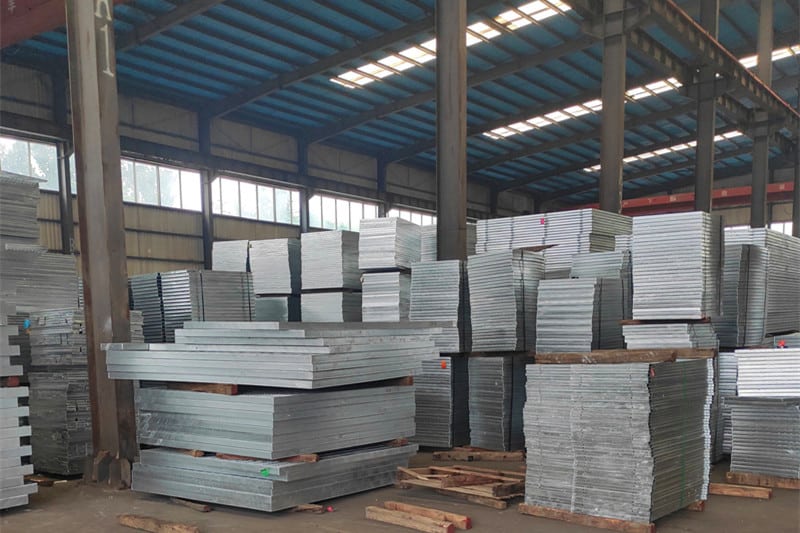
- Stable stacking based on panel size
- Optional palletizing or protective wrapping
Real Export Considerations
A professional welded steel grating supplier understands:
- Container loading optimization
- Protection against deformation during transit
- Compliance with destination country requirements
This is especially important for long-distance shipping where handling conditions are unpredictable.
Third-Party Inspection Support
Independent Verification
For large or critical projects, third-party inspection is often required. A capable supplier should:
- Cooperate with SGS, BV, or similar agencies
- Provide access to production and inspection records
- Support pre-shipment inspections
What This Tells You
Suppliers willing to accommodate third-party inspection usually have:
- Transparent processes
- Stable quality systems
- Confidence in their production
In contrast, resistance to inspection can be a red flag when evaluating a welded steel grating supplier.
Final Thoughts: Look Beyond Price
While pricing is always a factor, experienced buyers understand that the lowest quote rarely delivers the best outcome.
A qualified welded steel grating supplier should demonstrate strength in equipment, quality control, galvanizing, packaging, and inspection support. These factors collectively determine whether your project runs smoothly—or faces delays, rework, and hidden costs.
Taking time to evaluate suppliers upfront is one of the most cost-effective decisions in any grating project.






