








Understanding Press Locked Steel Grating Finish Options for Different Applications
Selecting the right finish is an important decision when purchasing press locked steel grating for industrial, commercial, or outdoor applications. While the structural design determines the load capacity and performance of the grating, the surface finish directly affects corrosion resistance, service life, maintenance requirements, and overall appearance.
For many project engineers and procurement teams, the choice often comes down to two common options: hot-dip galvanized press locked steel grating and painted press locked steel grating.
Both finishes have their own advantages. However, they are designed for different environments. Understanding the differences can help buyers avoid unnecessary maintenance costs and select a solution that matches the actual working conditions of the project.
At Hebei Grid Metal Products, we work with customers from different industries, including industrial platforms, walkways, wastewater treatment facilities, power plants, and construction projects. Based on practical manufacturing and application experience, the correct finish selection is usually determined by exposure conditions, expected service life, and maintenance plans.
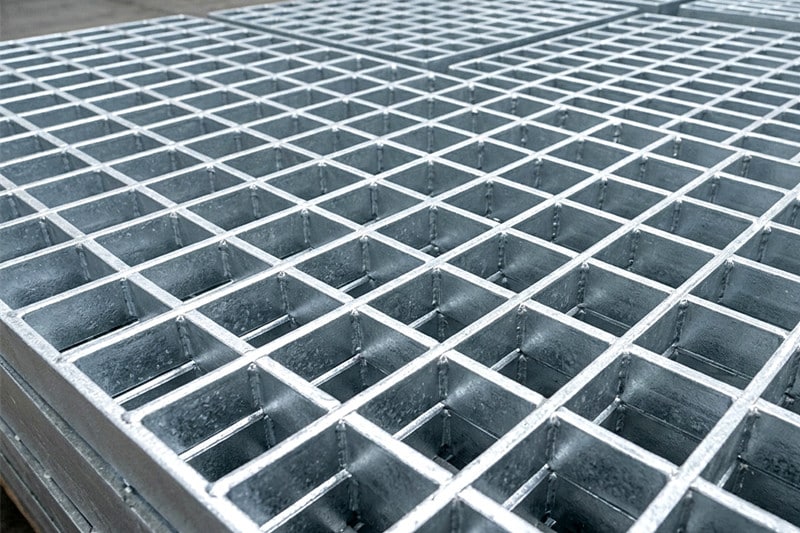
Hot-Dip Galvanized Press Locked Steel Grating for Outdoor Durability
Among various finish options, hot-dip galvanizing is widely recognized as one of the most reliable surface treatments for outdoor steel products.
A galvanized press locked steel grating finish provides long-term corrosion protection by creating a zinc coating that acts as a protective barrier between the steel surface and the surrounding environment. Unlike paint coatings that mainly provide surface protection, zinc coatings offer both barrier protection and sacrificial protection.
When the steel surface is exposed due to scratches or minor damage, the zinc layer can continue protecting the underlying steel from corrosion. This feature makes hot-dip galvanized press locked steel grating particularly suitable for demanding outdoor environments.
Common applications include:
- Outdoor walkways and platforms
- Chemical plants
- Marine and coastal facilities
- Wastewater treatment plants
- Industrial access structures
- Infrastructure projects exposed to rain and humidity
For projects where long service life and reduced maintenance are priorities, hot-dip galvanizing is often the preferred choice.
ASTM A123 Standard and Galvanized Coating Reliability
For many international projects, buyers require galvanized steel products to comply with recognized industry standards.
Hot-dip galvanized press locked steel grating is commonly produced according to ASTM A123, which specifies requirements for zinc coating on fabricated steel products. This standard helps ensure consistent coating thickness and corrosion protection performance.
A properly galvanized surface provides several practical benefits:
- Improved resistance to moisture and atmospheric corrosion
- Reduced frequency of repainting or surface repair
- Better performance in harsh outdoor conditions
- Longer overall service life compared with untreated steel
For engineering contractors and distributors, choosing products manufactured according to recognized standards helps reduce project risks and provides greater confidence during installation and long-term operation.
Painted Press Locked Steel Grating: When Appearance and Indoor Protection Matter
Painted press locked steel grating remains a practical option for certain applications, especially where appearance, color selection, or indoor installation requirements are important.
Paint coatings can provide a smooth and attractive surface finish. They are commonly used for:
- Indoor platforms
- Equipment access areas
- Architectural applications
- Areas requiring specific colors for identification or safety purposes
Compared with hot-dip galvanizing, painted finishes offer more flexibility in appearance. Customers can select different colors and coating systems according to project requirements.
However, painted steel grating mainly relies on the coating layer to protect the steel underneath. Once the paint film is damaged by impact, abrasion, or long-term weather exposure, moisture can reach the steel surface and accelerate corrosion.
Therefore, painted press locked steel grating requires more regular inspection and maintenance, especially in outdoor or high-corrosion environments.

Why Paint May Not Be Enough for High Corrosion Risk Areas
A common mistake in steel grating selection is choosing a painted finish for environments where corrosion resistance is a major concern.
Outdoor industrial environments often involve continuous exposure to:
- Rainwater
- High humidity
- Chemical substances
- Salt spray
- Temperature changes
In these conditions, paint coatings may gradually deteriorate due to ultraviolet exposure, mechanical wear, and environmental factors. Once the coating system fails, additional maintenance such as surface preparation, repainting, and corrosion repair may become necessary.
For high-risk corrosion applications, a galvanized press locked steel grating finish usually provides better long-term value because the zinc coating offers more durable protection with lower maintenance requirements.
Comparing Hot-Dip Galvanized and Painted Press Locked Steel Grating
| Comparison Factor | Hot-Dip Galvanized Finish | Painted Finish |
|---|---|---|
| Outdoor durability | Excellent | Moderate |
| Corrosion resistance | High | Depends on coating quality |
| Maintenance requirement | Low | Higher |
| Service life | Longer in harsh environments | Shorter without regular maintenance |
| Appearance options | Silver-gray zinc surface | Wide range of colors |
| Best application | Outdoor and corrosive environments | Indoor or decorative applications |
The right choice depends on the project environment rather than simply the initial purchase cost. A painted grating system may appear economical at the beginning, but additional maintenance expenses can increase the total cost over time.
Choosing the Right Finish for Your Press Locked Steel Grating Project
Before selecting a finish, buyers should consider several key factors:
Environmental Exposure
Projects located outdoors, near the coast, or in chemical environments usually require stronger corrosion protection.
Expected Service Life
If the grating is difficult to access after installation, choosing a durable finish can significantly reduce future maintenance challenges.
Maintenance Conditions
Facilities with limited maintenance schedules often benefit from hot-dip galvanized solutions.
Appearance Requirements
For architectural or indoor projects where visual appearance is a priority, painted finishes may provide more design flexibility.
A professional supplier should evaluate these factors together rather than recommending a single finish for every application.
Making a Better Investment in Press Locked Steel Grating
The surface finish is not just a cosmetic choice. It directly influences the performance, maintenance cost, and long-term reliability of press locked steel grating.
Hot-dip galvanized press locked steel grating is typically the better solution for outdoor and high-corrosion environments because of its superior durability and compliance with standards such as ASTM A123.
Painted press locked steel grating remains a suitable option for indoor applications or projects where appearance and color customization are important.
By selecting the right finish at the beginning of a project, engineers, contractors, and distributors can achieve better lifecycle performance and reduce unexpected maintenance costs.






