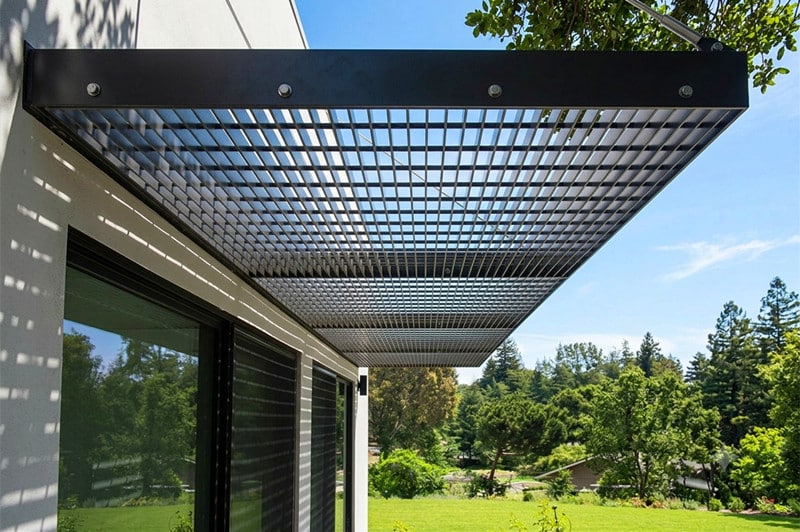









What Is Press Locked Steel Grating?
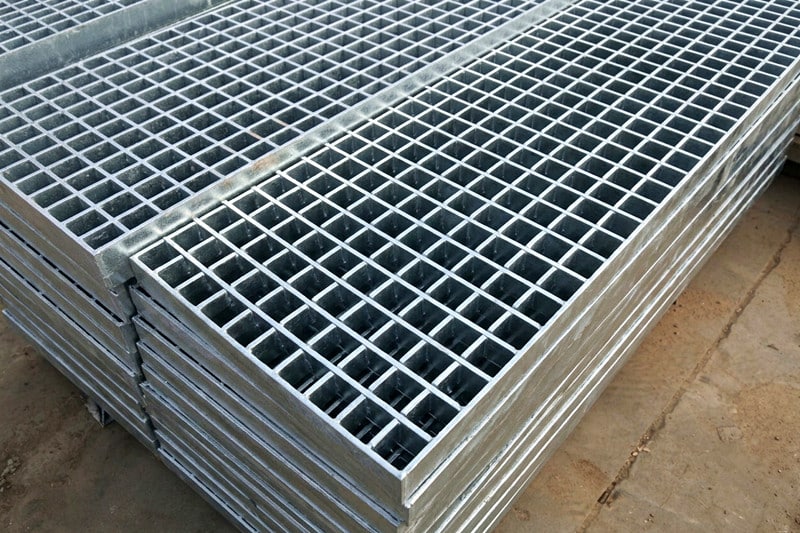
Press locked steel grating is an architectural-grade bar grating manufactured primarily through high-pressure mechanical interlocking. In standard production, cross bars are hydraulically pressed into pre-slotted bearing bars under controlled force to form a tight, precise grid pattern with a flush top surface.
In most cases, this process does not rely on full welding. However, in certain applications, manufacturers may apply limited tack welding at selected points to improve panel stability during transportation, handling, or installation—while still avoiding the extensive heat input associated with traditional welded grating.
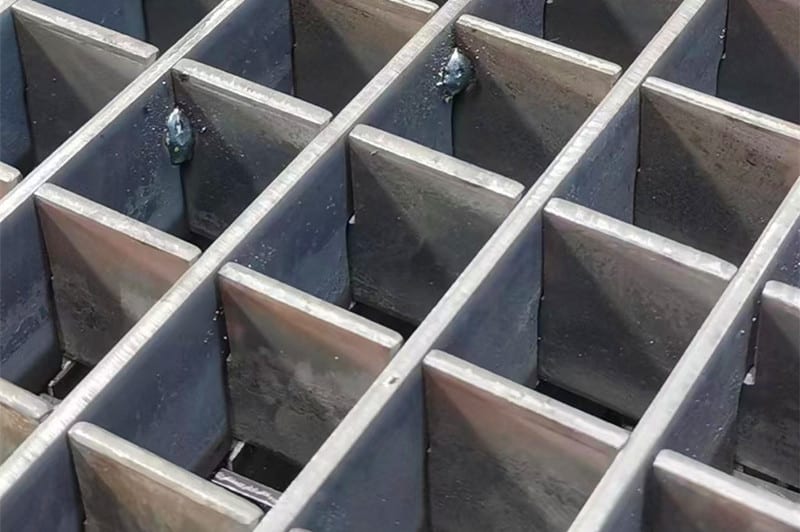
This interlocking-first approach plays a critical role in performance. Compared to fully welded systems, it significantly reduces heat-affected zones and minimizes the risk of thermal distortion or panel “bowing.” The result is a consistently flat panel with clean geometry and a refined, architectural-grade finish. These characteristics make it a preferred solution for press locked steel grating for architectural projects where both precision and appearance matter.
Why Architects Specify Press Locked Systems
Architectural teams are typically balancing structural requirements with visual intent. Specifying press locked steel grating for architectural projects helps meet both priorities without compromise.
- Clean Visual Lines: The uniform grid and flush intersections create a minimalist, modern appearance that aligns well with contemporary architectural design.
- Precision Alignment: Tight manufacturing tolerances ensure consistent spacing, which is essential for facade rhythm, symmetry, and visual continuity.
- Material Versatility: Available in carbon steel, stainless steel, allowing seamless integration into different material palettes.
- Custom Fabrication: Panels can be produced in project-specific sizes and configurations to match both structural layouts and design intent.
In practice, architects are not just selecting a load-bearing component—they are specifying a visible design element. Press locked grating effectively fulfills both roles.
Clean Surface and Precise Grid Alignment
One of the defining advantages of press locked grating is its smooth and uniform top surface. Because the cross bars are mechanically pressed rather than fully welded, the top plane remains visually consistent and uninterrupted.
This delivers two important benefits:
- Enhanced Aesthetic Consistency: Particularly valuable in high-visibility applications such as building facades, ceilings, and interior features.
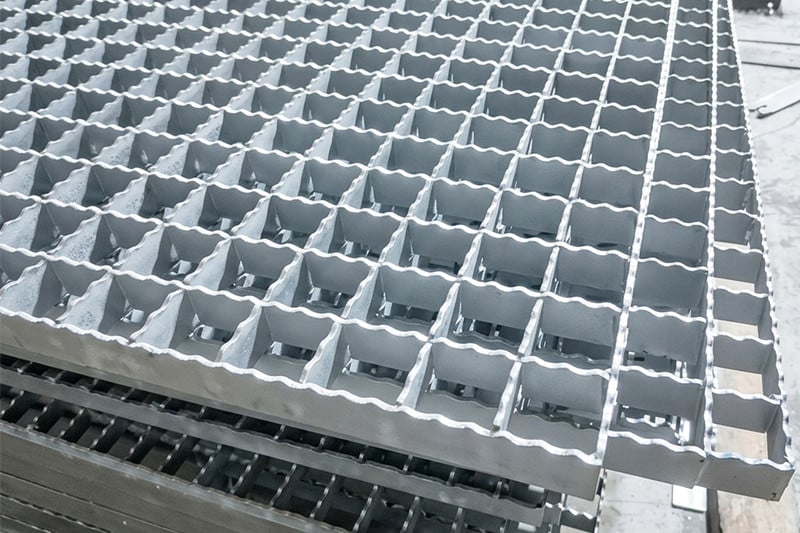
- Improved Safety and Comfort: A flatter walking surface reduces trip risks and provides better footing for pedestrian use. For outdoor or wet environments, serrated options can be specified to improve slip resistance.
Beyond appearance, grid precision directly impacts installation quality. In systems such as curtain walls or architectural screens, even minor dimensional variation can disrupt alignment. Press locked grating maintains tight tolerances, helping reduce on-site adjustments and improving installation efficiency.

Common Architectural Applications
In modern construction, press locked steel grating for architectural projects is widely used where visual performance and functional durability must work together. Typical applications include:
Facades and Building Skins
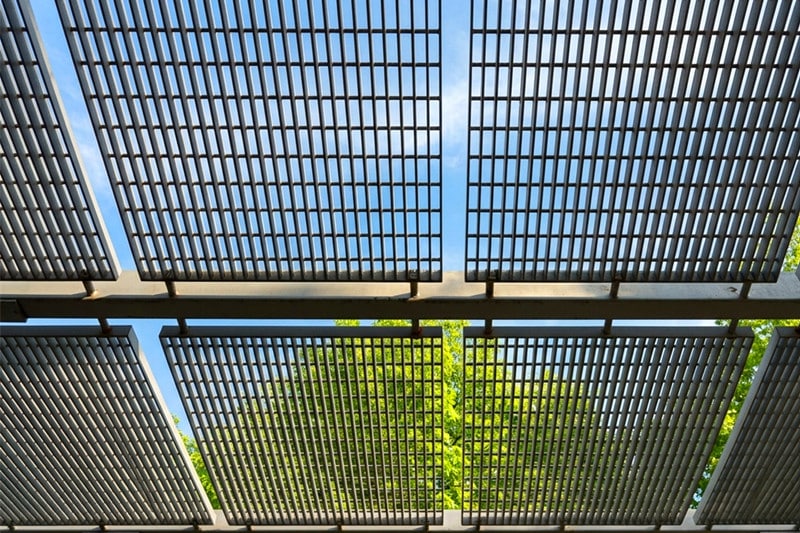
Used as exterior cladding or secondary facades, grating panels provide shading, ventilation, and a dynamic visual texture. Designers can control light transmission while maintaining airflow.
Architectural Screens and Sunshades
Suitable for privacy screens, brise-soleil systems, and decorative partitions. Grid spacing can be adjusted to balance shading performance with visibility.
Ceilings and Interior Features
In commercial and public buildings, press locked grating is often used in suspended ceiling systems, allowing integration with lighting and HVAC while maintaining an industrial-modern aesthetic.
Walkways and Platforms
For pedestrian walkways, mezzanines, and access platforms, this type of grating provides reliable load performance with a more refined appearance than traditional welded alternatives.
How to Choose Material and Finish
Selecting the appropriate material and surface finish is essential for long-term performance, especially in architectural applications where both durability and appearance are critical.
Material Selection
- Carbon Steel: The most commonly specified option for cost-sensitive projects. When combined with galvanizing, it provides a practical balance between strength and corrosion resistance for outdoor use.
- Stainless Steel: Preferred in corrosive or high-humidity environments such as coastal areas or food-processing facilities. It is also selected for projects requiring a premium architectural finish.
Surface Finish Options
- Hot-Dip Galvanizing: A widely used solution for outdoor applications, offering long-term corrosion protection and low maintenance.
- Powder Coating: Provides color flexibility and helps integrate the grating visually into the overall architectural scheme.
- Mill Finish or Polished (Stainless Steel): Used where a clean metallic appearance is desired without additional coating.
Specification Tip: Finish selection should always consider environmental exposure and lifecycle maintenance. For example, in coastal environments, stainless steel is often preferred despite higher initial cost due to its long-term durability.
Practical Selection Considerations for B2B Buyers
For contractors, fabricators, and project managers, specifying press locked steel grating for architectural projects requires balancing design intent with execution efficiency.
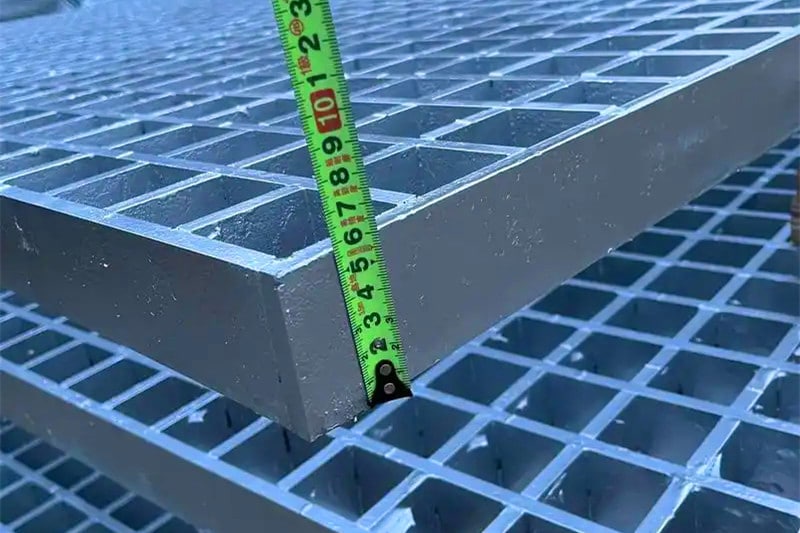
- Confirm load requirements and span capacity to ensure structural compliance.
- Coordinate panel dimensions with installation conditions to minimize field modification.
- Verify tolerance requirements, particularly for facade and screen systems.
- Align surface treatment with project timelines, especially when galvanizing is involved.
Early coordination with the manufacturer can significantly reduce rework and help ensure that both performance targets and architectural expectations are met. For design-driven projects where visual alignment is critical, press locked grating is often preferred over welded grating despite higher fabrication cost.