








When selecting press locked steel grating for an industrial project, the bearing bar size is one of the most important factors affecting load capacity, span performance, safety, and long-term service life.
Many buyers focus first on panel dimensions, surface finish, or material grade, but experienced engineers and procurement teams understand that the bearing bar size is the core element that determines whether a grating system can perform reliably under actual working conditions.
This guide explains common press locked steel grating bearing bar sizes, how they relate to load requirements and applications, and what information industrial buyers should provide when requesting a quotation.
Understanding Bearing Bars in Press Locked Steel Grating
The bearing bars are the main load-carrying components of steel grating. They run in the direction of the span and transfer applied loads to the supporting structures, such as beams, frames, or steel channels.
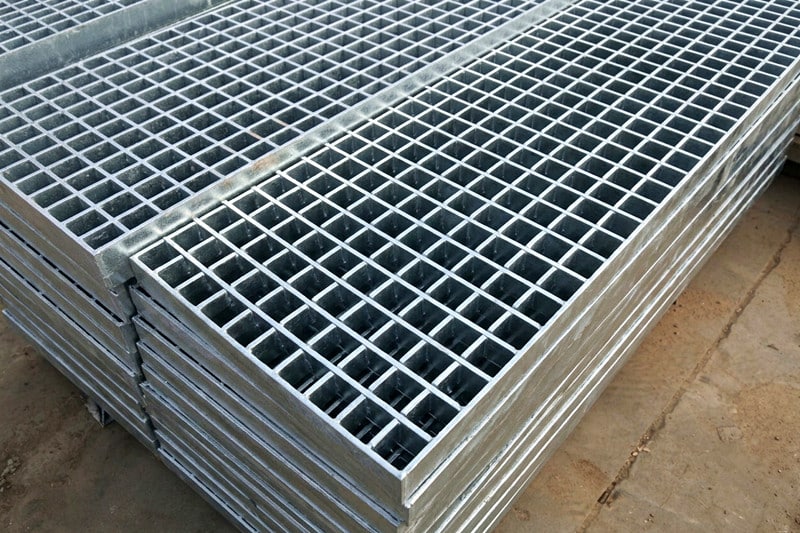
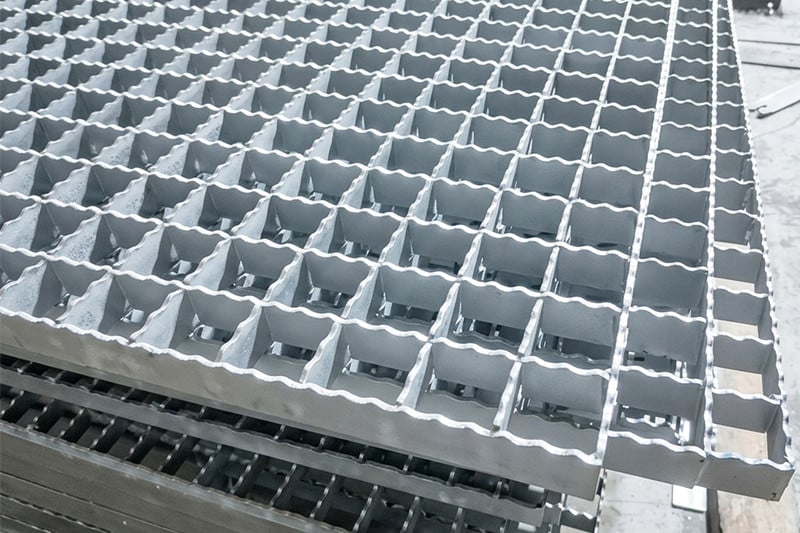
In a press locked steel grating system, cross bars are mechanically pressed into pre-slotted bearing bars under high pressure, creating a strong friction-locked connection. Unlike welded steel grating, this manufacturing method provides a clean surface appearance and a uniform grid structure, which makes it suitable for applications where both strength and visual appearance are important.
For industrial buyers, choosing the correct press locked steel grating bearing bar size requires consideration of:
- Applied load requirements
- Distance between supporting beams
- Panel dimensions
- Traffic conditions
- Environmental factors
- Required safety standards
A thicker or deeper bearing bar is not always necessary. The correct selection depends on the actual engineering requirements of the project.

Common Press Locked Steel Grating Bearing Bar Sizes
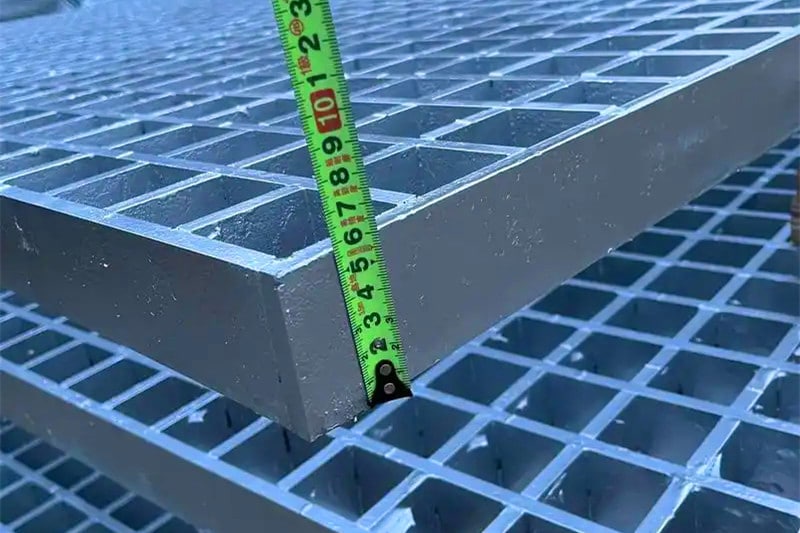
The bearing bar size is usually described by height × thickness. For example, a 25 × 3 mm bearing bar means the bar is 25 mm high and 3 mm thick.
Common bearing bar sizes used in press locked steel grating include:
25 × 3 mm Bearing Bar
This is one of the most commonly used sizes for light to medium-duty applications.
Typical applications include:
- Architectural walkways
- Decorative platforms
- Commercial building projects
- Pedestrian areas
- Maintenance platforms with moderate loads
The 25 × 3 mm bearing bar provides a balanced combination of strength, appearance, and material efficiency.
30 × 3 mm and 32 × 3 mm Bearing Bars
These sizes are frequently selected for general industrial applications where higher load capacity is required compared with standard architectural grating.
Common uses include:
- Factory platforms
- Equipment access areas
- Industrial walkways
- Mechanical rooms
- Service platforms
For many industrial projects, these sizes provide a practical solution between lightweight designs and heavy-duty requirements.
40 × 3 mm and 40 × 5 mm Bearing Bars
These bearing bar sizes are designed for applications requiring increased load resistance and longer spans.
They are often used in:
- Industrial flooring systems
- Power plants
- Chemical facilities
- Oil and gas platforms
- Heavy equipment areas
Mathematically, doubling the height of a bearing bar increases its load capacity fourfold (h²), whereas doubling its thickness only doubles it (t). Increasing the bearing bar height significantly boosts the Section Modulus (Z), allowing panels to bridge wider spans under heavy loads without structural sag or excessive deflection.
50 × 5 mm and Larger Bearing Bars
Heavy-duty press locked steel grating typically uses larger bearing bars when the application involves high loads, vehicle traffic, or demanding industrial environments.
Typical applications include:
- Heavy machinery platforms
- Truck access areas
- Mining facilities
- Offshore structures
- Heavy industrial plants

These configurations require careful engineering evaluation because larger bearing bars affect not only load capacity but also panel weight, installation methods, and project costs.
Relationship Between Bearing Bar Size, Load Capacity, and Span
One of the most common mistakes in steel grating selection is choosing a bearing bar size based only on appearance or previous projects.
The actual performance of press locked steel grating depends heavily on the relationship between bearing bar size and span distance.
A longer span generally requires:
- Higher bearing bar height
- Increased bearing bar thickness
- Reduced spacing between bearing bars
- Additional structural support
For example, a grating panel installed over a short distance between supports may perform well with a smaller bearing bar. However, the same bearing bar size may not be suitable when the support spacing increases.
Professional buyers usually provide:
- Clear span distance
- Required load rating
- Load type (uniform load or concentrated load)
- Application environment
This information allows manufacturers to recommend a suitable bearing bar specification instead of simply supplying a standard size.
Architectural and Industrial Applications Have Different Requirements
Although press locked steel grating is widely used in both architectural and industrial projects, the priorities are different.
Architectural Applications
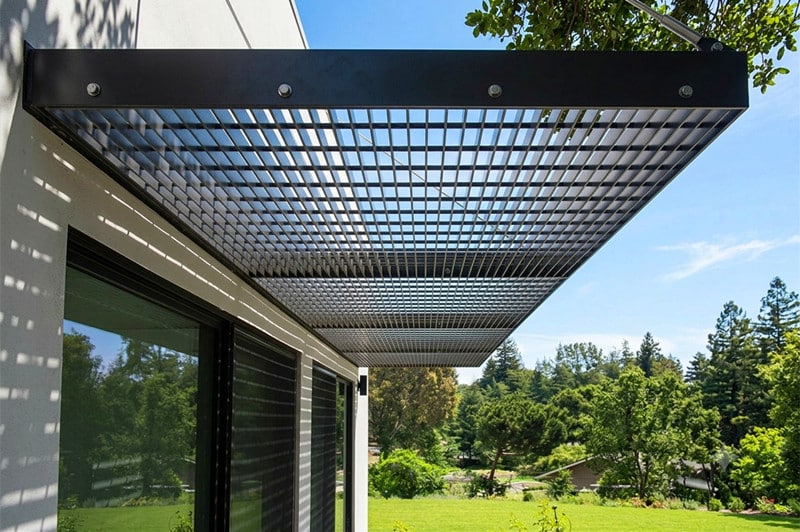
In architectural projects, appearance often plays a major role. Buyers may focus on:
- Clean grid design
- Surface consistency
- Visual transparency
- Stainless steel or aluminum options
- Custom patterns
Common bearing bar sizes are usually lighter because the loads are mainly pedestrian-related.
Examples include:
- Building facades
- Stair treads
- Decorative platforms
- Walkways in public spaces
Industrial Applications
Industrial buyers usually prioritize:
- Load capacity
- Safety performance
- Durability
- Corrosion resistance
- Maintenance requirements
Industries such as chemical processing, energy, manufacturing, and transportation often require engineering-based selection of bearing bar dimensions.
In these applications, the correct press locked steel grating bearing bar size helps reduce maintenance issues and improves operational safety.
How Industrial Buyers Should Submit Requirements for Quotation
To receive an accurate quotation and technical recommendation, buyers should provide more than just panel dimensions.
A complete inquiry should include:
Project Information
- Application type
- Industry sector
- Installation location
- Indoor or outdoor use
Grating Specifications
- Bearing bar size requirement (if available)
- Bearing bar spacing
- Cross bar spacing
- Panel dimensions
- Surface treatment requirement
Load Information
- Required load capacity
- Span distance between supports
- Pedestrian or vehicle loading
- Any special equipment loads
Material and Finish Requirements
- Carbon steel, stainless steel, or aluminum
- Galvanizing requirements
- Painting or special coating requirements
Providing complete project details helps manufacturers evaluate the correct press locked steel grating bearing bar size and avoid unnecessary cost increases caused by over-design or incorrect selection.
Working With an Experienced Steel Grating Manufacturer
Selecting the right bearing bar size is not only a technical decision but also a project reliability decision.
An experienced bar grating manufacturer can help buyers balance:
- Structural performance
- Material cost
- Installation requirements
- International standards
- Long-term durability
At the quotation stage, professional suppliers usually review the application conditions instead of recommending a single standard specification for every project.
For overseas buyers, working with a manufacturer familiar with international industrial requirements can simplify communication and reduce risks during production and installation.