








Why Standards Matter More Than Most Buyers Expect
In international projects, steel bar grating is rarely rejected because it “looks wrong.” It gets rejected because it doesn’t meet the specified standards.
For buyers sourcing across borders, especially from Asia to North America or the Middle East, understanding steel bar grating standards is not just a technical requirement—it’s a risk control strategy. Standards define how products are manufactured, tested, and accepted on-site. Without them, even a well-fabricated product can fail inspection.
From our experience supporting export projects, the two most frequently referenced standards are ASTM A123 (for galvanizing) and NAAMM MBG 531 (for grating design and manufacturing). Knowing how they apply will save time, cost, and back-and-forth during procurement.
Galvanizing Standards: Understanding ASTM A123

What ASTM A123 Covers
ASTM A123 is the standard specification for hot-dip galvanizing on iron and steel products. For steel bar grating, it defines:
- Zinc coating thickness (based on steel thickness)
- Coating uniformity
- Adhesion quality
- Inspection criteria
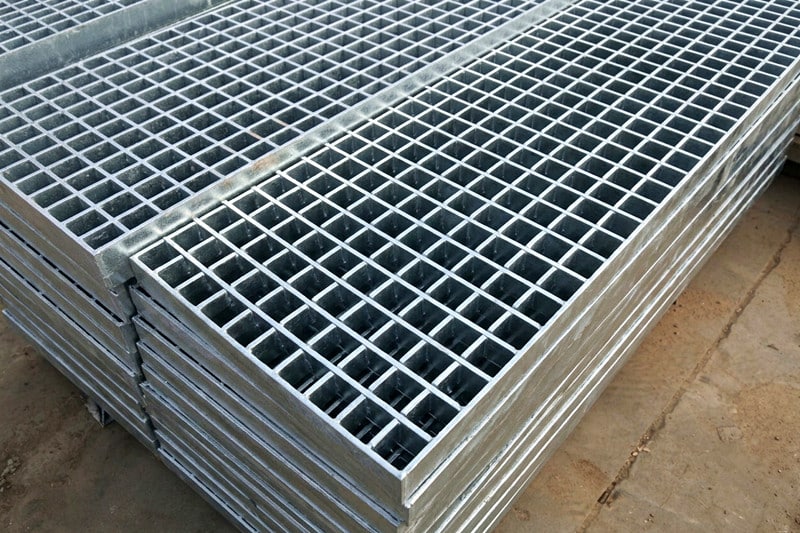
In practical terms, it ensures your galvanized steel bar grating can withstand corrosion in real-world environments.
Why Galvanizing Thickness Matters
Not all galvanized coatings are equal. ASTM A123 sets minimum coating thickness requirements, which directly impact service life.
- Thicker zinc coating = longer corrosion resistance
- Thinner coating = lower cost but shorter lifespan
Field insight:
In coastal or chemical plant environments, insufficient galvanizing is one of the most common causes of premature failure. Buyers who specify ASTM A123 reduce that risk significantly.
Common Misunderstanding in Export Projects
Some suppliers may offer “galvanized” grating without clearly stating compliance with ASTM A123.
This creates two risks:
- Coating thickness may not meet project requirements
- Inspection may fail at destination
Best practice:
Always confirm galvanizing standard and request inspection records or coating thickness reports before shipment.
Load Table Standards: NAAMM MBG 531 Explained
What NAAMM MBG 531 Defines
NAAMM MBG 531 is widely used in North America for metal bar grating. It provides guidance on:
- Load calculations
- Deflection limits
- Recommended spans
- Design considerations
For project buyers, this standard acts as a benchmark for evaluating whether a grating configuration is structurally adequate.
Load vs Deflection: What Engineers Actually Check
It’s not enough for grating to “hold” a load—it must also limit deflection.
NAAMM MBG 531 typically references deflection limits such as:
- L/200 for general applications
- L/240 or stricter for sensitive environments
Practical example:
A grating panel may technically support a load without breaking, but if it bends too much, it can feel unsafe or fail compliance checks.
Why Load Tables Must Match the Standard
Load tables provided by suppliers should align with NAAMM MBG 531 assumptions.
If they don’t, you may run into:
- Overestimated load capacity
- Incorrect span recommendations
- Engineering approval delays
Buyer tip:
When reviewing quotations, ask whether load tables are based on NAAMM standards or internal calculations.
Inspection Requirements: What Gets Checked Before Approval
Visual and Dimensional Inspection
Before shipment, steel bar grating is typically checked for:
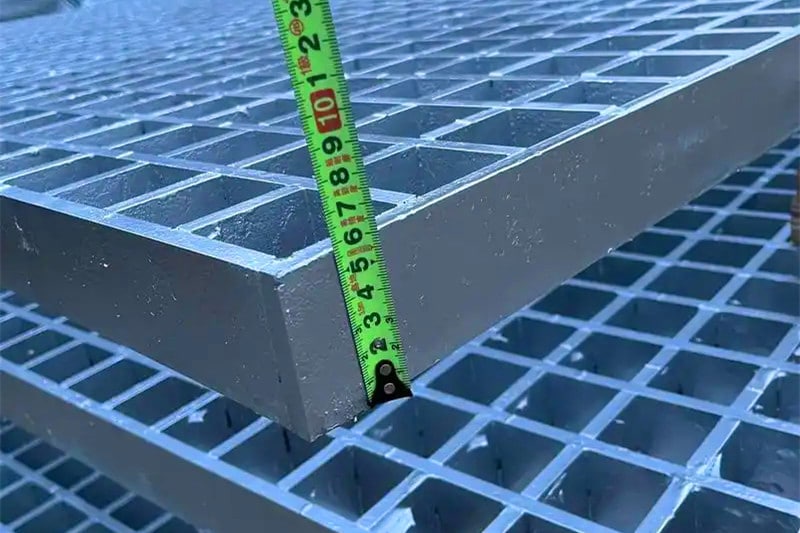
- Panel size accuracy
- Bar spacing consistency
- Welding quality
Even small deviations can cause installation issues on-site.
Galvanizing Inspection
For ASTM A123 compliance, inspections may include:
- Coating thickness measurement (magnetic gauge)
- Surface uniformity check
- Adhesion testing (if required)
Documentation and Traceability
For export projects, especially government or EPC contracts, documentation is critical:
- Mill certificates (raw material)
- Galvanizing reports
- Inspection records
Real-world note:
Missing documentation is one of the most common reasons shipments are delayed at port or rejected during project audits.
Why Standards Are Critical for Export Projects
Reducing Procurement Risk
When you specify recognized steel bar grating standards, you reduce ambiguity between buyer and supplier.
This leads to:
- More accurate quotations
- Fewer technical disputes
- Faster approval cycles
Ensuring Compliance Across Regions
Different regions may prefer different standards, but ASTM and NAAMM are widely accepted internationally.
Specifying them helps ensure:
- Compatibility with engineering expectations
- Easier third-party inspection
- Smoother project approval
Protecting Long-Term Project Performance
Standards are not just about passing inspection—they ensure durability over time.
A properly specified and compliant steel bar grating system will:
- Resist corrosion
- Maintain structural integrity
- Reduce maintenance costs
Common Mistakes Buyers Should Avoid
Assuming “Galvanized” Means ASTM A123
Not all galvanizing meets the same standard.
Ignoring Load Table Sources
Unverified load data can lead to underperforming installations.
Overlooking Inspection Documentation
Lack of paperwork can delay entire projects.
Mixing Standards Without Clarification
Combining Chinese, ASTM, and other standards without alignment can create confusion.
How to Specify Standards Clearly in RFQs
To avoid miscommunication, include the following in your inquiry:
- Grating standard: NAAMM MBG 531 (or project-specific equivalent)
- Galvanizing standard: ASTM A123
- Load and span requirements
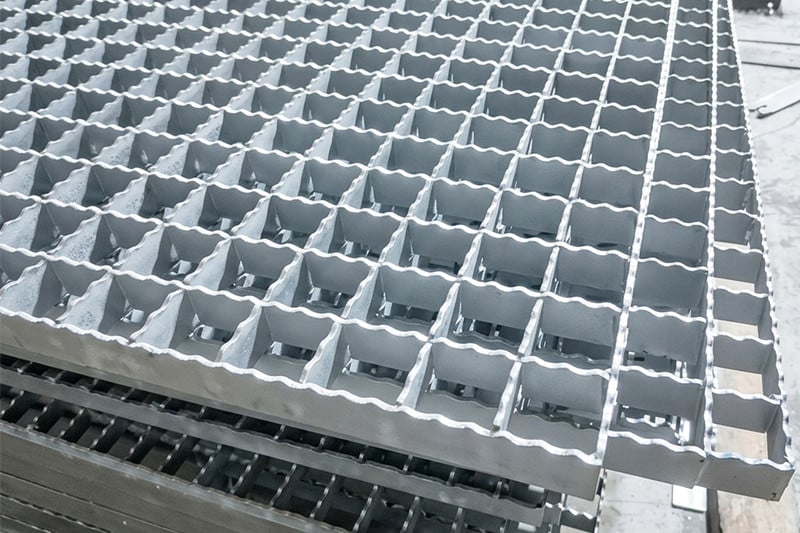
- Surface type (plain or serrated)
- Inspection and documentation requirements
You can also reference related resources like steel bar grating specifications or steel bar grating load tables to ensure alignment across design and procurement.
Final Thoughts: Standards Are Your Quality Guarantee
In global sourcing, standards are the common language between buyer and manufacturer. They eliminate assumptions and define expectations clearly.
For experienced buyers, specifying ASTM A123 and NAAMM MBG 531 is not just a technical detail—it’s a safeguard for quality, compliance, and long-term performance.
If your project involves international procurement, taking the time to define steel bar grating standards upfront will pay off in smoother execution and fewer surprises down the line.