








Why Welded Steel Grating Is a Practical Choice for Wastewater Facilities
Wastewater treatment plants operate in one of the most aggressive industrial environments. Constant exposure to moisture, chemicals, biological contaminants, and fluctuating temperatures creates a demanding setting for any structural material—especially walkway systems.
In this context, welded steel grating for wastewater plants has proven to be a reliable and widely adopted solution. Its open-grid design supports drainage and ventilation, while the welded construction provides the structural integrity required for continuous operation.
From municipal treatment plants to industrial wastewater facilities, engineers often specify welded grating because it balances durability, safety, and lifecycle cost—three priorities that directly impact long-term plant performance.

Managing Moisture and Corrosion Risks
Continuous Exposure to Wet and Chemical Conditions
Wastewater environments are inherently corrosive. Walkways are regularly exposed to water, sludge, cleaning agents, and sometimes corrosive gases such as Hydrogen Sulfide gas. Over time, these factors can degrade unprotected materials.
A key advantage of welded steel grating for wastewater plants is its compatibility with corrosion-resistant treatments. Proper material selection and surface finishing are critical to ensuring long service life.
Hot-Dip Galvanized Steel Grating
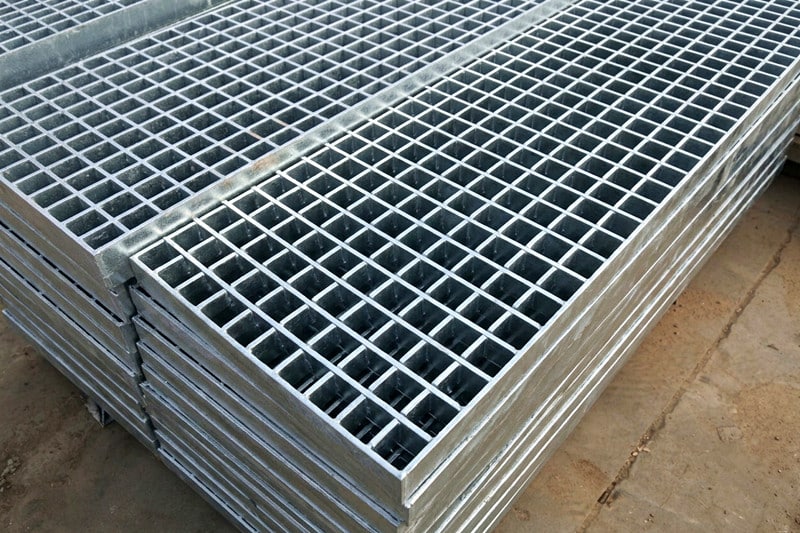
Hot-dip galvanizing is one of the most common solutions for wastewater applications. The zinc coating forms a protective barrier that resists rust and extends the lifespan of the grating, even in humid and chemically active environments.
This option is typically preferred for:
- Municipal wastewater plants
- Outdoor walkways and platforms
- Projects requiring cost-effective corrosion protection
Stainless Steel Grating Options
For highly corrosive or chemically sensitive environments, stainless steel grating may be specified. Although the initial cost is higher, it offers superior resistance to corrosion and reduces long-term maintenance requirements.
This is especially relevant for:
- Industrial wastewater systems
- Chemical processing facilities
- Areas with strict hygiene or contamination control standards

Drainage Performance in Wet Environments
Open Structure for Efficient Water Flow
One of the defining features of welded steel grating is its open-grid configuration. Unlike solid flooring, it allows water, sludge, and debris to pass through easily, preventing accumulation on walking surfaces.
In wastewater treatment plants, this translates to:
- Reduced standing water
- Lower slip hazards
- Improved sanitation conditions
- Easier cleaning and washdown
Supporting Operational Efficiency
Effective drainage is not just a safety feature—it also supports operational continuity. Poor drainage can lead to pooling, corrosion acceleration, and maintenance interruptions.
By using welded steel grating for wastewater plants, operators can maintain cleaner, safer, and more efficient working areas across different process zones.
Anti-Slip Surface Options for Worker Safety
Addressing Slip Hazards in Treatment Plants
Safety is a major concern in wastewater facilities, where surfaces are often wet or contaminated. Walkways must provide reliable traction under all conditions.
To address this, welded steel grating is available with different surface profiles.
Serrated Bearing Bars

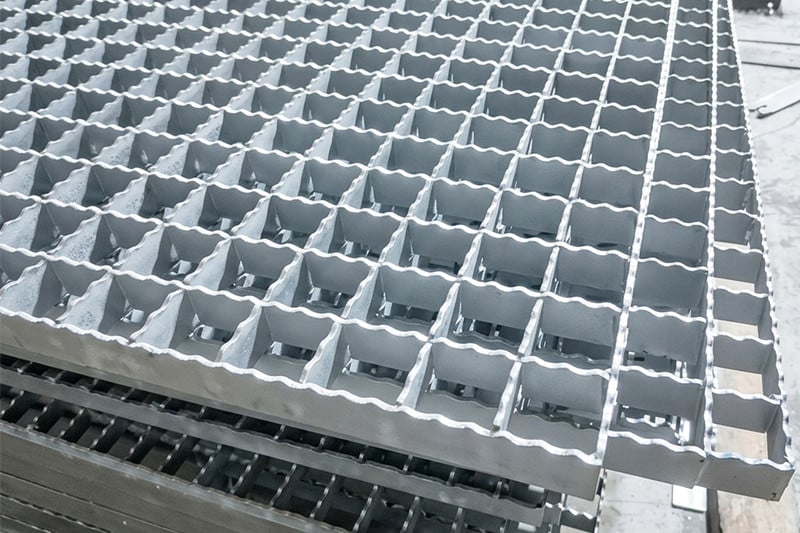
Serrated grating is commonly used in wastewater plants because it enhances grip. The notched edges increase friction, making it safer for workers to walk on wet or oily surfaces.
Typical applications include:
- Outdoor walkways
- Aeration tank access areas
- Sludge processing zones
Smooth Surface Grating
Smooth bar grating may still be used in controlled environments where slip risks are lower and easier cleaning is required. However, for most wastewater applications, serrated options are generally preferred.
Inspection and Maintenance Considerations
Routine Inspection Improves Service Life
Even with corrosion-resistant treatments, regular inspection is essential. Over time, coatings can wear, and mechanical stress may affect structural integrity.
Maintenance teams should routinely check:
- Surface condition and coating integrity
- Signs of corrosion or rust
- Load-bearing performance
- Fixing and support connections
Easy Replacement and Installation
Another advantage of welded steel grating for wastewater plants is its modular design. Panels can be removed and replaced individually, which simplifies maintenance and reduces downtime.
This is particularly valuable in treatment plants where continuous operation is critical and shutdowns must be minimized.
Choosing the Right Grating for Wastewater Applications
Selecting the right grating solution involves more than choosing a material—it requires understanding the specific conditions of the plant.
Key decision factors include:
- Level of exposure to moisture and chemicals
- Load requirements for pedestrian or equipment traffic
- Need for anti-slip performance
- Maintenance strategy and lifecycle cost
- Compliance with industry standards and safety regulations
Working with an experienced manufacturer ensures that specifications match real-world operating conditions, reducing the risk of premature failure or costly redesigns.
Supporting Safer and More Durable Wastewater Infrastructure
In wastewater treatment environments, reliability and safety are non-negotiable. Walkway systems must perform consistently under wet, corrosive, and high-traffic conditions.
With its strength, drainage capability, and adaptability, welded steel grating for wastewater plants remains a dependable choice for engineers and facility operators.
By combining the right material, surface treatment, and design specifications, facilities can improve worker safety, reduce maintenance costs, and extend the service life of their infrastructure.