









Why Load Classification Matters More Than You Think
In real-world industrial environments, the difference between success and premature failure often comes down to load assumptions. Selecting between heavy duty steel bar grating and light duty walkway panels is not simply a matter of budget—it’s a structural decision that directly affects safety, service life, and compliance.
Engineers typically define load categories based on application: pedestrian traffic, rolling loads, forklift movement, or heavy equipment. The mistake many buyers make is treating all grating as interchangeable, when in reality, load requirements vary significantly across projects.

Understanding Load Categories in Steel Bar Grating
Typical Load Classifications
- Light Duty: Pedestrian walkways, maintenance platforms
- Medium Duty: Occasional cart or light equipment traffic
- Heavy Duty: Forklifts, truck loads, industrial machinery
Heavy duty steel bar grating is engineered to withstand concentrated loads and repeated stress cycles. It is commonly specified in ports, factories, trench covers, and logistics centers where load intensity is unpredictable and often dynamic.
Light duty walkway panels, on the other hand, are designed for controlled environments with consistent foot traffic. Using them outside of these parameters introduces risk that is not always immediately visible.
Bearing Bar Thickness: The Core Structural Difference
At the heart of the performance gap is the bearing bar. This is the primary load-carrying element of any steel bar grating system.
Key Differences in Bearing Bars
- Heavy Duty Steel Bar Grating
- Thicker and deeper bearing bars (e.g., 6mm–10mm thickness or more)
- Higher moment of inertia for load resistance
- Designed for long-term structural integrity
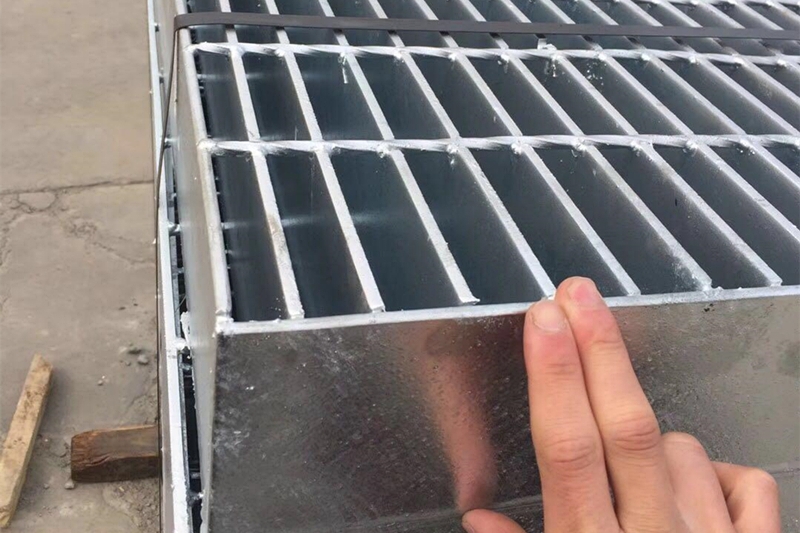
- Light Duty Walkway Panels
- Thinner bars (typically 3mm–5mm)
- Limited load-bearing capacity
- Optimized for weight reduction and cost efficiency

From an engineering standpoint, increasing bearing bar thickness directly improves load capacity and reduces deflection. However, it also increases weight and cost—making proper specification essential rather than optional.
Span Limits and Deflection Control
Span is another critical variable that is often underestimated during procurement. Even a high-quality grating panel will fail if it is installed beyond its allowable span.
How Span Impacts Performance
- Longer spans increase deflection under load
- Excessive deflection leads to fatigue and eventual failure
- Improper support spacing compromises safety
Heavy duty steel bar grating is specifically designed to handle wider spans without excessive deflection. This makes it suitable for applications like:
- Trench covers with wide openings
- Industrial flooring systems
- Bridge decking and loading docks
Light duty panels require closer support spacing. When used beyond their design span, they may appear stable initially but degrade quickly under repeated use.
Common Mistakes: Substituting Light Duty for Heavy Duty
One of the most frequent issues seen in global projects is the substitution of light duty grating in place of heavy duty specifications—often driven by cost pressure.
Risks of Incorrect Substitution
- Structural deformation under load
- Safety hazards for personnel and equipment
- Increased maintenance costs due to early failure
- Project delays from replacement and rework
From a supplier’s perspective, this is not just a product issue—it’s a specification and communication issue. Clear load data, application details, and engineering drawings are essential to avoid these costly mistakes.
Balancing Cost and Performance in Procurement
While light duty walkway panels offer a lower upfront cost, they are not always the most economical choice when viewed across the full project lifecycle.
Total Value Consideration
- Heavy duty steel bar grating reduces long-term risk
- Lower maintenance and replacement frequency
- Better performance under variable and dynamic loads
- Higher confidence in safety compliance
For EPC contractors and project managers, the focus should shift from initial price to total installed value and operational reliability.
When to Specify Heavy Duty Steel Bar Grating
Heavy duty solutions are strongly recommended in:
- Industrial plants with vehicle traffic
- Ports, warehouses, and logistics hubs
- Municipal infrastructure (trenches, drainage covers)
- Energy and power generation facilities
If there is any uncertainty about load conditions, specifying heavy duty steel bar grating provides a safety margin that protects both assets and personnel.
Final Insight from Industry Practice
In over a decade of supplying grating to international projects, one pattern remains consistent: projects that prioritize correct load specification at the beginning avoid costly corrections later.
Choosing between heavy duty and light duty is not just a technical detail—it’s a decision that impacts installation efficiency, long-term durability, and overall project success.


