









When engineers select press locked steel grating for industrial platforms, walkways, stair treads, or architectural applications, the opening size is one of the most important design factors. Although different grating openings may look similar on a drawing, they can significantly influence load performance, walking comfort, ventilation, drainage efficiency, and the overall appearance of the finished structure.
For project engineers, contractors, and procurement teams, understanding how a press locked steel grating grid opening affects design decisions helps prevent costly modifications during fabrication and installation.
Unlike welded steel grating, press locked steel grating is manufactured by pressing cross bars into precisely slotted bearing bars, creating a clean and uniform panel structure. This manufacturing method allows engineers to select different opening patterns according to specific project requirements.
Understanding Press Locked Steel Grating Grid mesh sizes
The grid opening refers to the clear distance between bearing bars and cross bars after the grating panel is manufactured. It is usually defined by two dimensions, such as 33×33mm or 30×50mm, representing the opening width and length.
Common press locked steel grating openings include:
33×33mm Grid Opening
The 33×33mm opening is one of the most widely used options for industrial applications. Its balanced structure provides a good combination of strength, safety, and visual appearance.
Typical applications include:
- Industrial walkways
- Maintenance platforms
- Factory flooring
- Equipment access areas
- Commercial architectural projects
The relatively smaller opening size improves walking comfort and reduces the risk of small objects passing through the grating surface. It is often selected for areas with frequent pedestrian traffic.
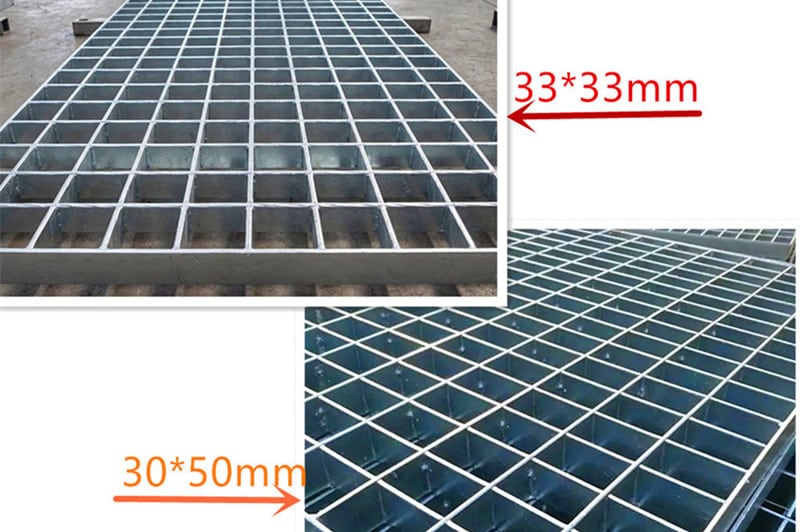
30×50mm Grid Opening
The 30×50mm opening provides a slightly more open surface compared to 33×33mm grating. It allows improved airflow, light transmission, and drainage performance.
This opening pattern is commonly used in:
- Ventilation platforms
- Outdoor structures
- Industrial facilities
- Areas requiring efficient water drainage
For projects where debris control is less critical but ventilation and drainage are important, 30×50mm can be an effective choice.
How Grid Opening Affects Engineering Design
Selecting the correct grid openings is not only an aesthetic decision. It directly influences several engineering considerations.
Visual Density and Architectural Appearance
The opening ratio determines how dense or open the grating surface appears.
Smaller openings create a denser visual effect, providing a more solid-looking walking surface. This is often preferred in architectural applications where appearance and pedestrian comfort are important.
Larger openings create a lighter and more transparent structure, which can help reduce visual obstruction and improve the open feeling of platforms and walkways.
For designers working on industrial facilities or modern architectural structures, the opening pattern should match both functional requirements and the intended visual effect.
Ventilation and Airflow Performance
In industrial environments, ventilation is often a key consideration.
A larger press locked steel grating grid opening provides more open area, allowing better airflow through platforms and elevated structures. This is particularly useful in:
- Power plants
- Chemical facilities
- Offshore platforms
- Mechanical equipment areas
Improved airflow can help reduce heat accumulation and support safer operating conditions around industrial equipment.
However, engineers should also consider local safety requirements. Extremely large openings may not be suitable for pedestrian areas where smaller objects or tools could fall through.
Drainage Performance in Outdoor Applications
For outdoor walkways, drainage capability is an important factor when selecting steel grating openings.
A more open grid design allows rainwater, snowmelt, and process fluids to pass through quickly, helping maintain a safer walking surface.
Common applications include:
- Outdoor platforms
- Bridges and access walkways
- Wastewater treatment facilities
- Industrial yards
When designing drainage systems, engineers should evaluate the relationship between grating opening size, surface slope, and environmental conditions to ensure reliable performance.
Walking Comfort and Safety Considerations
The opening size of steel grating directly affects pedestrian comfort.This is particularly critical for elevated walkways and stair treads, where users require solid underfoot support to prevent slips and visual disorientation.
For areas with regular foot traffic, smaller openings are usually preferred because they provide better support for different types of footwear and reduce the feeling of walking on an overly open surface.
Design engineers should consider:
- Frequency of pedestrian use
- Footwear conditions
- Worker safety requirements
- Presence of carts or mobile equipment
A suitable aperture dimensions can improve user experience while maintaining the required structural performance.
How Grid Opening Selection Affects Project Drawings
During the design stage, the selected grating opening should be clearly defined in engineering drawings and specifications.
Incorrect or incomplete opening information may cause problems during fabrication, including:
- Incorrect panel dimensions
- Additional cutting requirements
- Installation delays
- Material replacement costs
Professional drawings normally include details such as:
- Bearing bar size and spacing
- Cross bar spacing
- Grid opening dimensions
- Surface treatment requirements
- Panel dimensions
Working with an experienced steel grating supplier helps ensure that design requirements are accurately converted into production specifications.
Choosing the Right Press Locked Steel Grating Grid Opening for Your Project
There is no single opening size suitable for every application. The best choice depends on the balance between load requirements, safety standards, environmental conditions, and project objectives.
For example:
- 33×33mm openings are often preferred for pedestrian areas requiring improved walking comfort and safety.
- 30×50mm openings are suitable for applications requiring higher openness, ventilation, and drainage performance.
At the design stage, engineers should evaluate the complete operating environment rather than selecting an opening size based only on appearance or initial cost.
With years of experience in manufacturing press locked steel grating, professional suppliers can provide technical guidance on opening selection, load requirements, fabrication details, and project specifications.






