









Steel Bar Grating for Loading Bays and Truck Access Floor Areas
In industrial logistics environments, loading bays and truck access zones represent some of the most demanding applications for flooring systems. Unlike pedestrian walkways, these areas must withstand concentrated wheel loads, repetitive traffic cycles, and dynamic impact forces. Selecting the right steel bar grating for truck access is not just a matter of strength—it’s a matter of long-term operational safety and cost control.

This article outlines the critical engineering considerations and practical specification guidelines for steel bar grating used in truck-accessible floor areas.
Wheel Load Considerations in Loading Bays
Static vs. Dynamic Loads
Truck access areas are subjected to both static loads (parked vehicles) and dynamic loads (moving forklifts, trucks braking or turning). The real risk often comes from dynamic impact, especially when:
- Trucks enter at uneven levels
- Forklifts carry concentrated loads on small tire footprints
- Sudden braking transfers weight unevenly
Unlike uniformly distributed loads, wheel loads are highly concentrated, creating localized stress points on the grating surface.
Load Distribution Challenges
Rubber tires, especially from forklifts, create smaller contact patches than expected. This means the actual pressure per square inch can be significantly higher than nominal load ratings suggest. Without proper design, this leads to:
- Permanent deformation (deflection beyond allowable limits)
- Bar bending or twisting
- Weld joint fatigue over time
Heavy-Duty Bearing Bar Requirements
Recommended Bar Sizes
For truck access applications, standard light-duty grating is not sufficient. Instead, heavy-duty configurations should be specified, typically including:
- Bearing bar thickness: 5mm to 10mm (or heavier depending on span)
- Bearing bar height: 50mm, 75mm, or higher
- Narrow bar spacing to improve load distribution
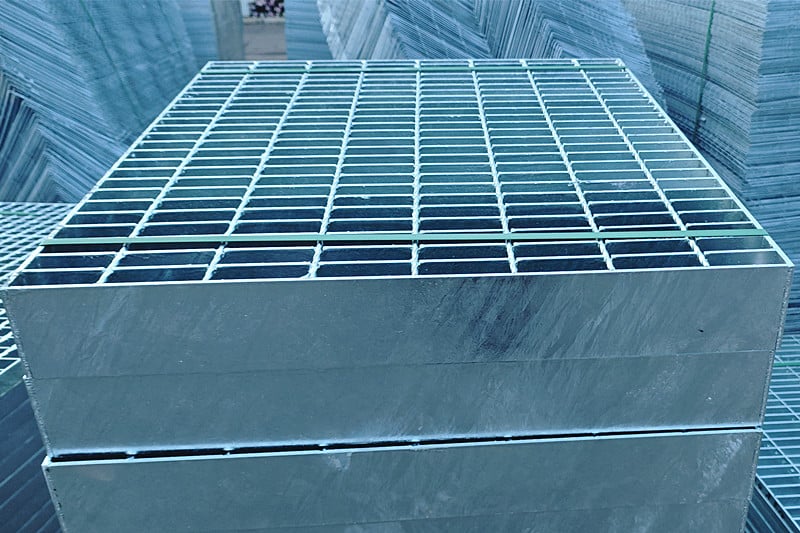
Heavy-duty steel bar grating is engineered to transfer concentrated loads across multiple bars, reducing stress on individual members.
Material and Manufacturing Considerations
- Carbon steel (ASTM A36 or equivalent) is commonly used for strength and cost efficiency
- Hot-dip galvanizing ensures corrosion resistance in outdoor loading bays
- Welded grating is preferred over press-locked for maximum structural integrity
From a manufacturing standpoint, tighter welding tolerances and consistent bar alignment are critical to maintaining performance under repeated loading cycles.
Deformation and Structural Risk Factors
Excessive Deflection
One of the most common failures in truck-access grating is excessive deflection. Even if the grating does not immediately fail, repeated bending can lead to:
- Metal fatigue
- Weld cracking
- Surface unevenness affecting vehicle stability
Industry best practice typically limits deflection to L/200 or stricter, depending on application.
Long-Term Fatigue
Truck access areas experience thousands of load cycles. Over time, even minor design compromises can result in:
- Progressive weakening of bearing bars
- Joint failure at cross bar intersections
- Increased maintenance or replacement costs
This is why over-engineering slightly at the specification stage often results in lower lifecycle costs.
Common Mistakes in Truck Access Applications
Using Light-Duty Grating
A frequent issue in cost-driven projects is substituting walkway grating for vehicle zones. While this may pass initial inspection, it often leads to early failure.
Ignoring Span Length
Even heavy-duty bars will fail if the span between supports is too long. Proper support spacing is just as critical as bar size.
Overlooking Fixing Methods
Improper installation—such as insufficient clips or loose fixing—can cause grating panels to shift under traffic, increasing stress and safety risks.
Specification Checklist for Loading Bays
When sourcing or specifying steel bar grating for truck access, use the following checklist to ensure performance and reliability:
Load Requirements
- Maximum vehicle weight (including forklifts)
- Wheel load and tire type
- Frequency of traffic
Grating Configuration
- Bearing bar size (height and thickness)
- Bar spacing
- Grating type (welded recommended)
Structural Design
- Span length between supports
- Deflection limits (e.g., L/200 or stricter)
- Safety factor requirements
Surface and Protection
- Anti-slip surface (serrated bars if needed)
- Galvanized or coated finish
- Environmental exposure (indoor vs. outdoor)
Installation Details
- Fixing clips or welding method
- Panel layout and support frame design
- Expansion considerations for temperature changes
Practical Insight from Industry Experience
In real-world projects, the difference between a reliable loading bay and a problematic one often comes down to early-stage decisions. Engineers and procurement teams who prioritize correct load analysis and grating selection typically see:
- Longer service life
- Reduced maintenance interruptions
- Improved operational safety
On the other hand, underspecified grating can lead to costly retrofits and downtime—far exceeding any initial savings.
Conclusion
Choosing the right steel bar grating for truck access is a technical decision that directly impacts safety, durability, and operational efficiency. By understanding wheel load behavior, selecting appropriate heavy-duty bar sizes, and following a structured specification process, buyers and engineers can ensure their loading bay systems perform reliably under demanding conditions.


