









Carbon Steel Grating vs Stainless Grating: What Matters on Harsh Job Sites
When specifying grating for aggressive environments—chemical plants, coastal facilities, wastewater treatment systems, or heavy industrial platforms—the choice between carbon steel grating and stainless steel grating is not just a material decision. It directly impacts lifecycle cost, safety, maintenance intervals, and long-term performance.
In this guide, we break down carbon steel grating vs stainless grating from a practical engineering and procurement perspective, focusing on cost, corrosion resistance, protective treatments, and when upgrading to stainless steel actually makes financial sense.

Material Cost: Upfront Savings vs Lifecycle Value
Carbon Steel Grating: Budget-Friendly and Widely Used
Carbon steel grating remains the industry standard for most industrial flooring and access systems due to its affordability and structural strength.
- Lower raw material cost
- Easier fabrication and availability
- Ideal for large-scale projects with tight budgets
However, carbon steel requires protective treatment (typically galvanizing) to prevent corrosion, which adds to the total cost—but still keeps it significantly below stainless steel.
Stainless Steel Grating: Higher Initial Investment
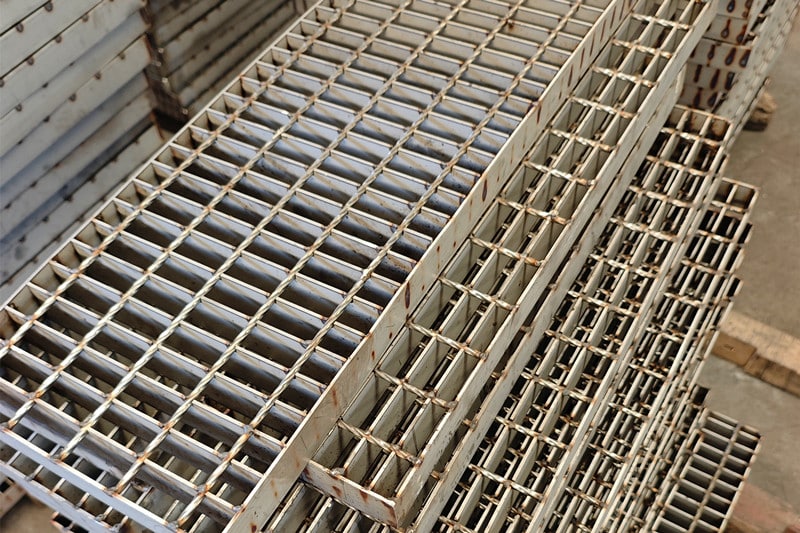
Stainless steel grating—typically grades 304 or 316—comes with a substantially higher upfront cost.
- Material cost can be 3–5x higher than carbon steel
- More expensive fabrication and welding processes
- Longer lead times in some markets
That said, the total cost of ownership often tells a different story in corrosive environments.
Corrosion Resistance: The Deciding Factor in Harsh Environments
Carbon Steel + Galvanizing
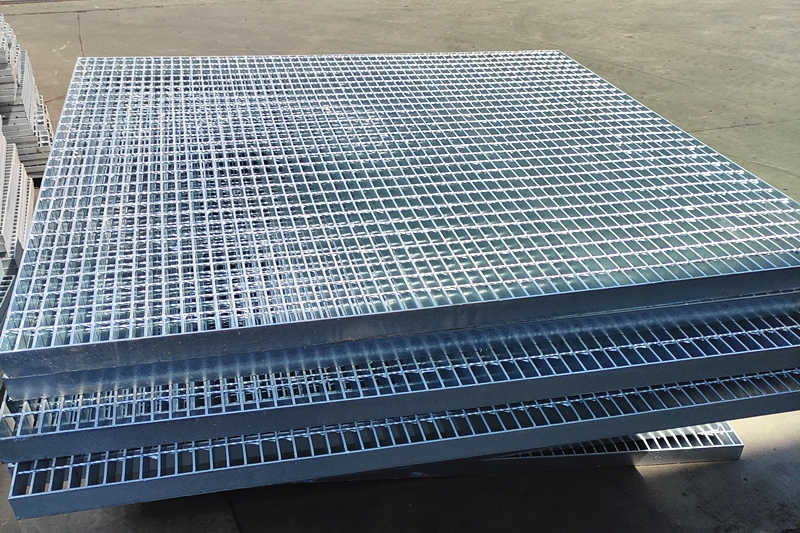
Carbon steel by itself is highly susceptible to rust. That’s why hot-dip galvanizing is the default protection method.
- Zinc coating provides a sacrificial barrier
- Suitable for outdoor and moderately corrosive environments
- Performance depends on coating thickness and exposure conditions
In environments with constant moisture, salt spray, or chemical exposure, galvanized coatings will eventually degrade.
Stainless Steel: Built-In Corrosion Resistance
Stainless steel contains chromium, which forms a passive oxide layer that resists corrosion naturally.
- No coating required
- Excellent resistance to chemicals, moisture, and salt
- Grade 316 performs especially well in marine and chloride-rich environments
For applications where corrosion failure is not acceptable, stainless steel offers a clear advantage.
Galvanizing Protection: How Far Can It Go?
Hot-dip galvanizing is often the tipping point in the carbon steel grating vs stainless grating debate.
Advantages of Galvanized Carbon Steel
- Cost-effective corrosion protection
- Self-healing properties for minor scratches
- Proven performance in construction and infrastructure
Limitations to Consider
- Coating thickness can vary
- Damage during transport or installation may expose steel
- Limited lifespan in highly acidic or saline environments
In aggressive conditions, maintenance (inspection, touch-up coatings) becomes necessary—adding hidden operational costs.
When Is Stainless Steel Worth the Upgrade?
From a procurement standpoint, stainless steel grating is not always necessary—but in certain scenarios, it’s the smarter long-term investment.
Choose Stainless Steel Grating When:
- The environment includes continuous chemical exposure
- You are operating in marine or coastal areas
- Hygiene is critical (e.g., food processing, pharmaceuticals)
- Maintenance access is limited or costly
- Failure risk must be minimized (safety-critical structures)
Stick with Carbon Steel Grating When:
- The environment is dry or mildly corrosive
- Budget constraints are a primary concern
- Galvanizing provides sufficient protection
- Regular maintenance is feasible
Practical Recommendation: Engineering + Cost Alignment
In real-world projects, the decision is rarely black and white. Many industrial buyers adopt a hybrid approach:
- Use galvanized carbon steel grating for general areas
- Upgrade to stainless steel grating in high-risk zones
This strategy balances cost efficiency with durability, ensuring performance where it matters most.
Final Thoughts
The debate around carbon steel grating vs stainless grating ultimately comes down to environment severity, maintenance expectations, and lifecycle cost analysis.
Carbon steel grating offers excellent value for standard applications, especially when protected with galvanizing. Stainless steel grating, while more expensive upfront, delivers unmatched reliability in harsh, corrosive conditions—often justifying its cost over time.
If you’re specifying grating for a demanding project, it’s worth consulting with an experienced steel grating manufacturer who can evaluate your exposure conditions and recommend the most cost-effective solution.


